Roaringwater Bay Kayaking
30 nautical miles over a long weekend
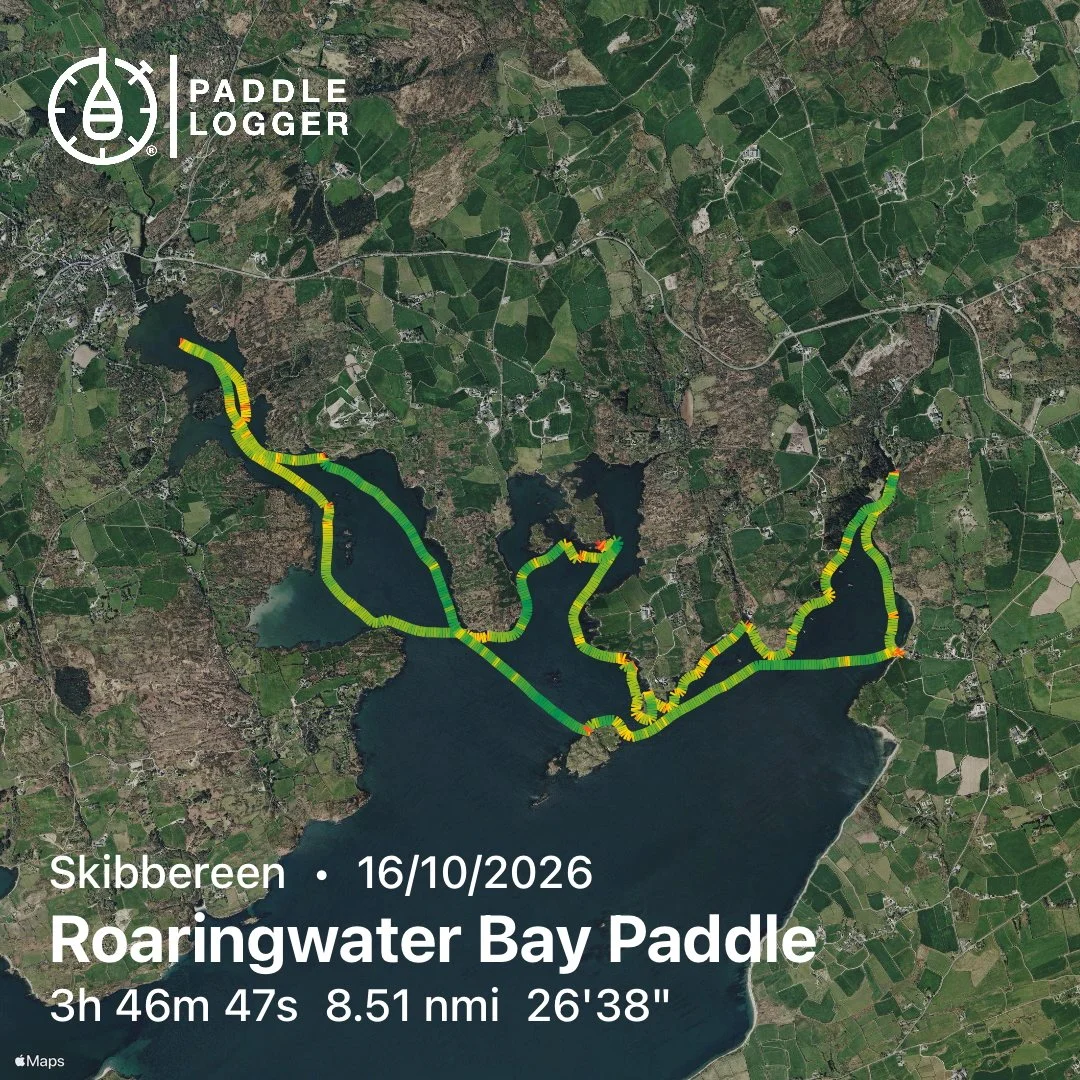
A weather window opened up mid-October that was too good an opportunity to miss. Sandwiched in-between two weeks of high winds, three days of forecasted benign conditions prevailed. So early on the Friday, we packed up the gear and struck off for Ballydehob in West Cork.
We put in at Lahertanvally Pier, which turned out to be a busy working pier. A friendly welcome and plenty of room at the adjacent beach for a leisurely put in.
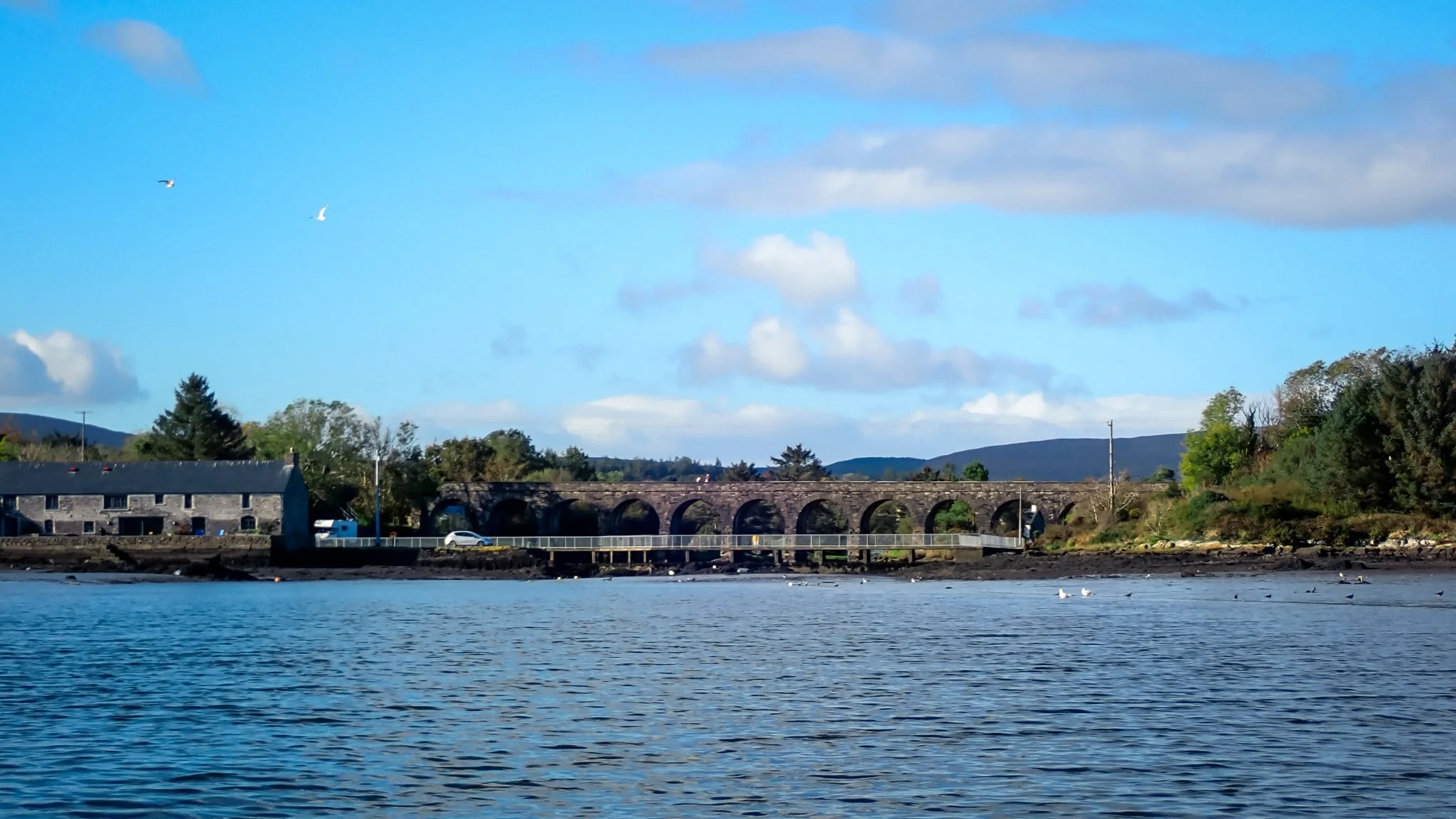
Given the fresh breeze, we explored the creek into which Roaringwater River flows, and then hugged the coast around to Kilcoe Castle and on to Poulgorm Bay for lunch. The only stretch we felt the breeze was striking up towards Ballydehob pier.
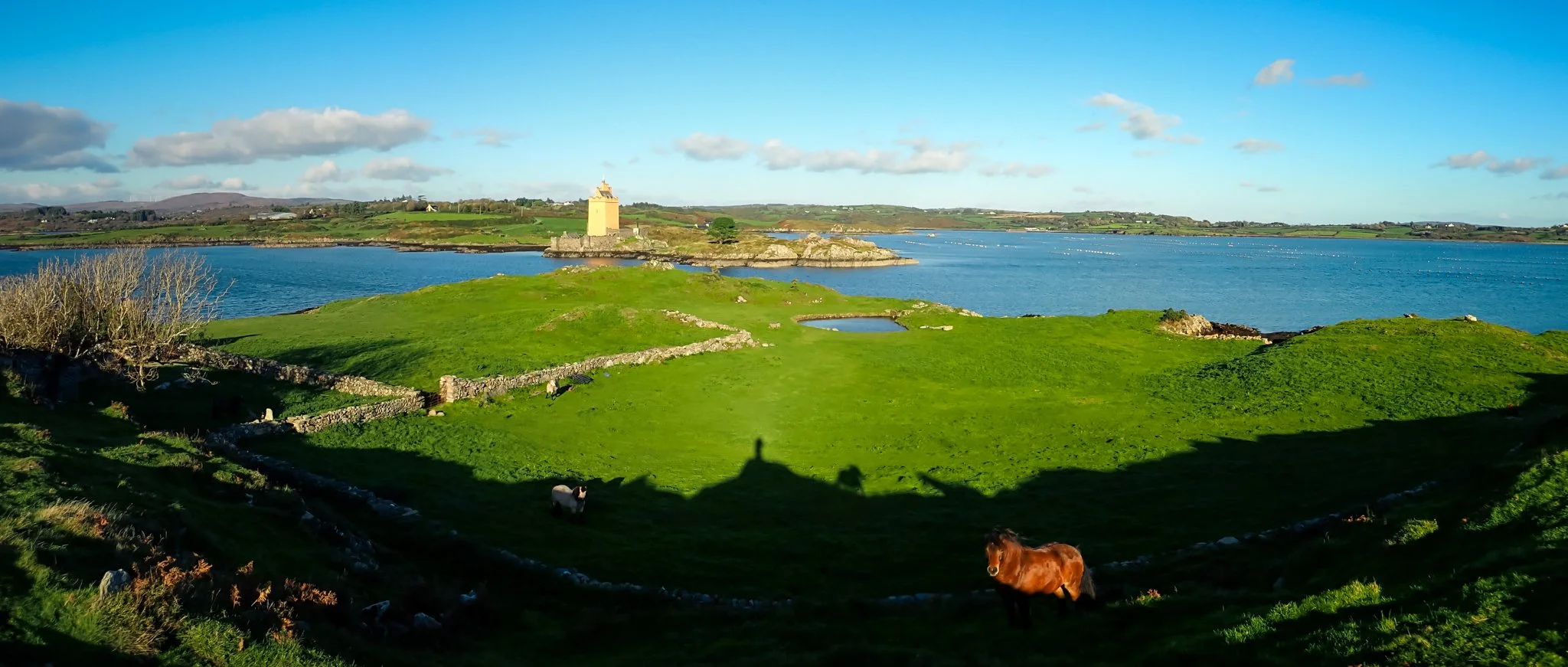
Jeremy Irons and Sinéad Cusack restored the 15th century Kilcoe Castle in 2004, including the “ochre” limewash render. It has a striking presence in the landscape.
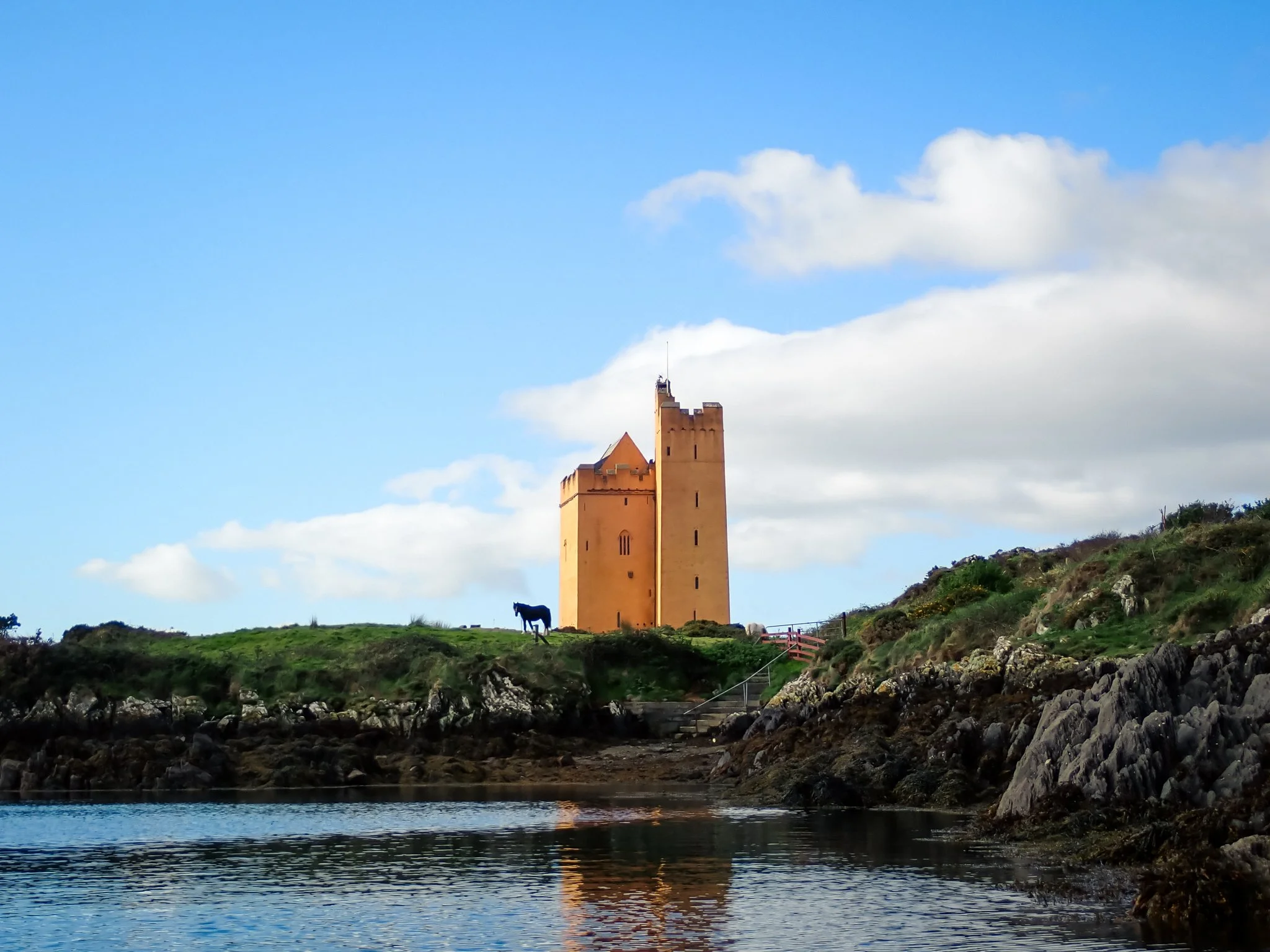
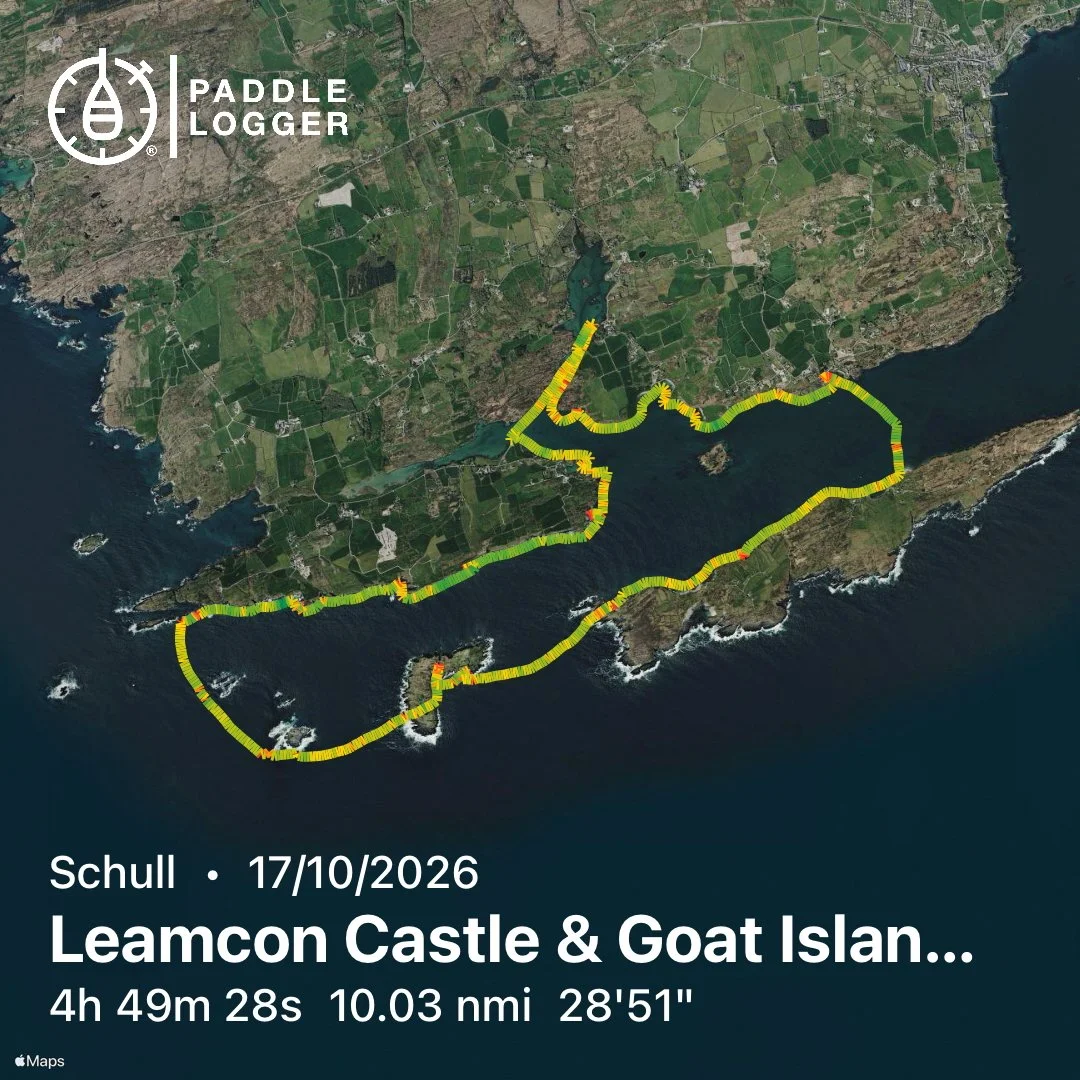
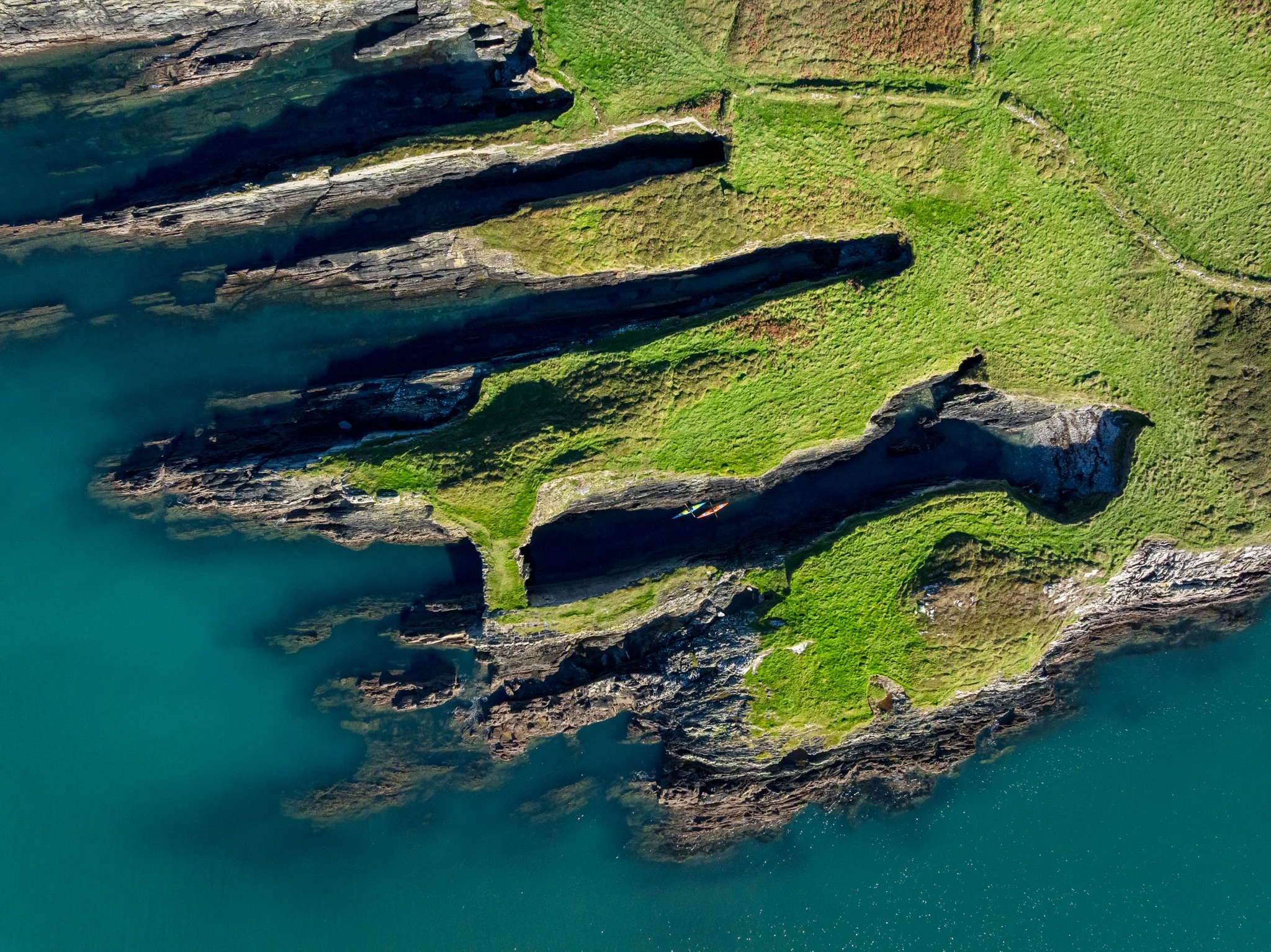
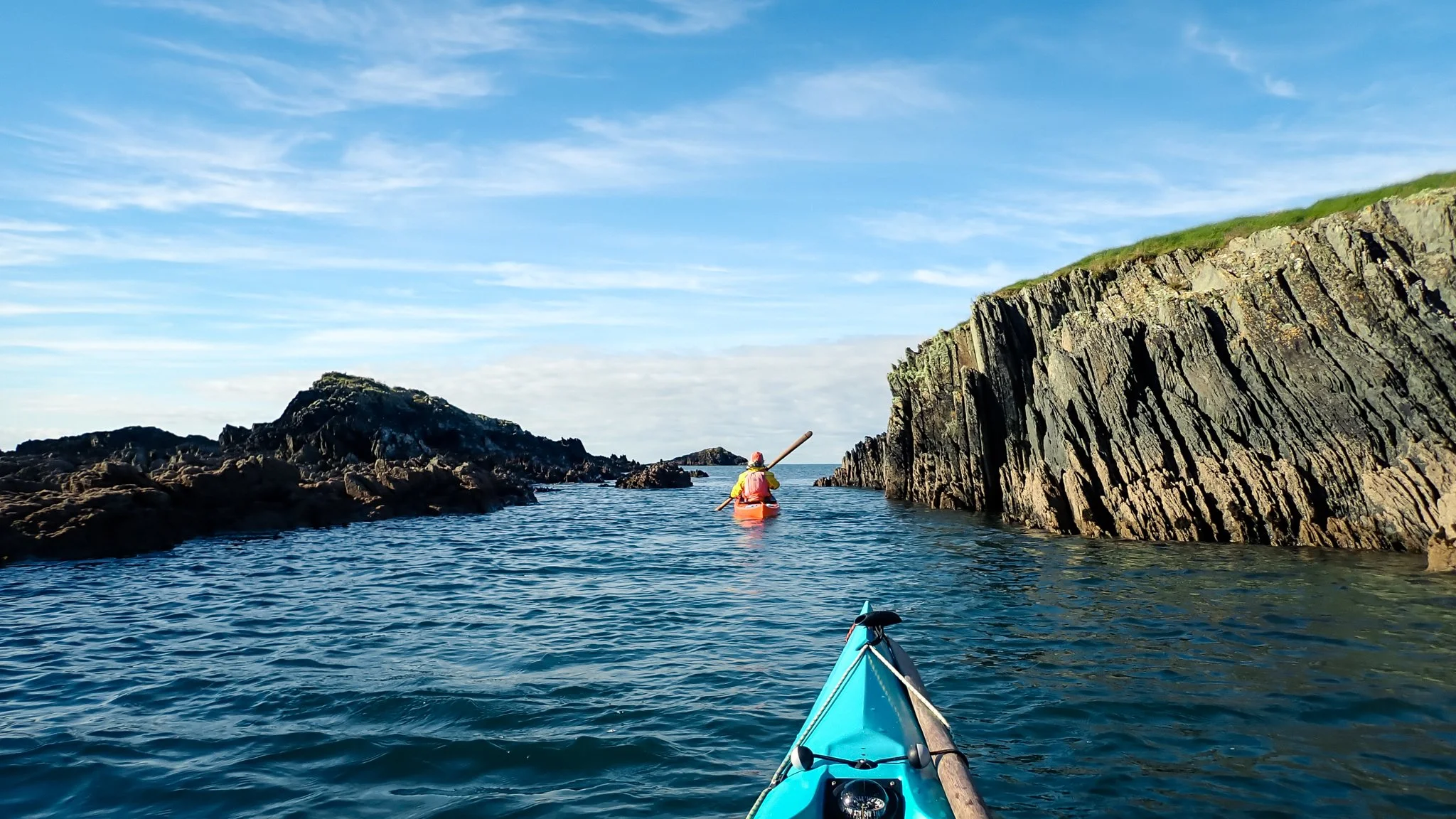
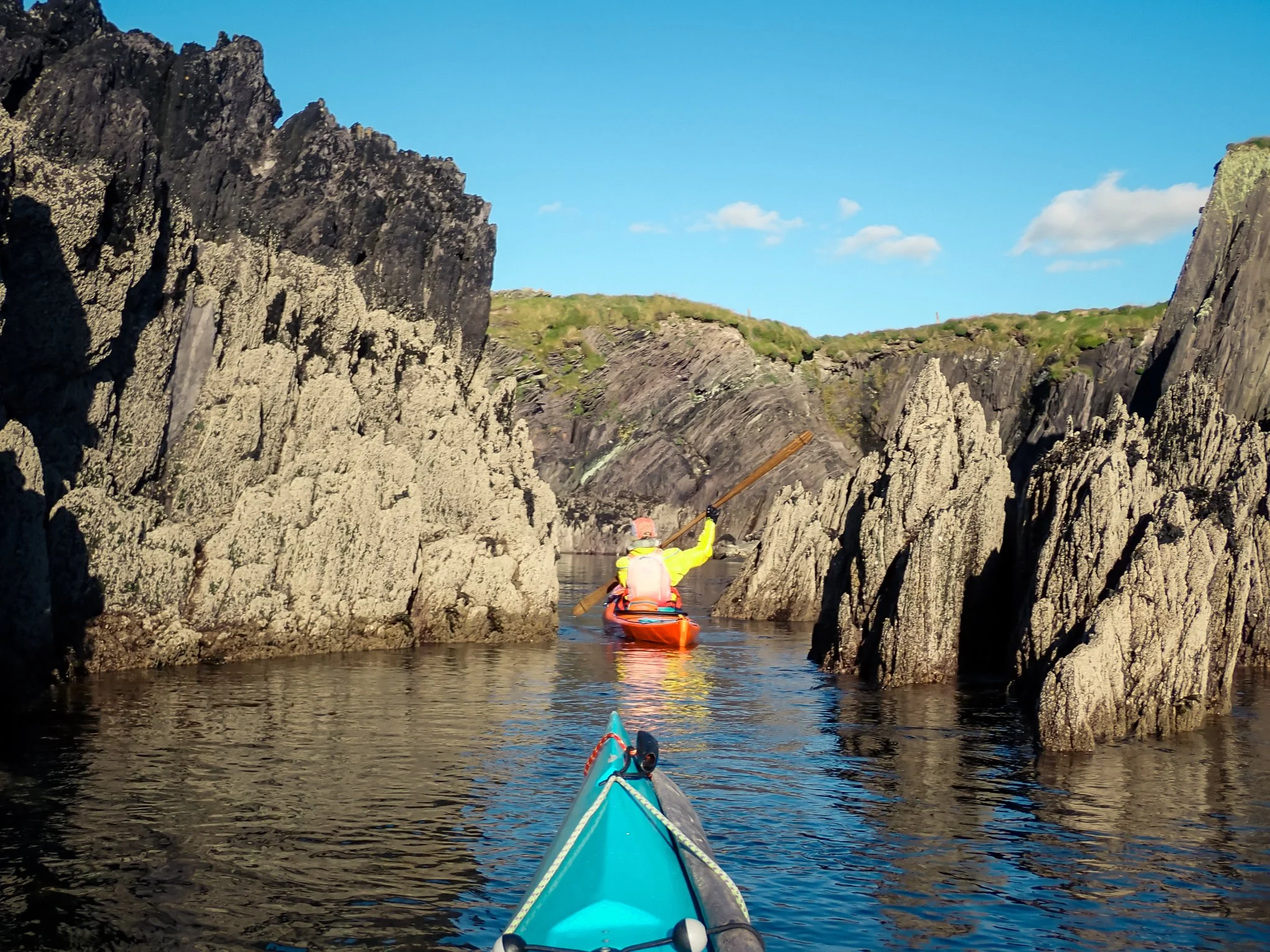
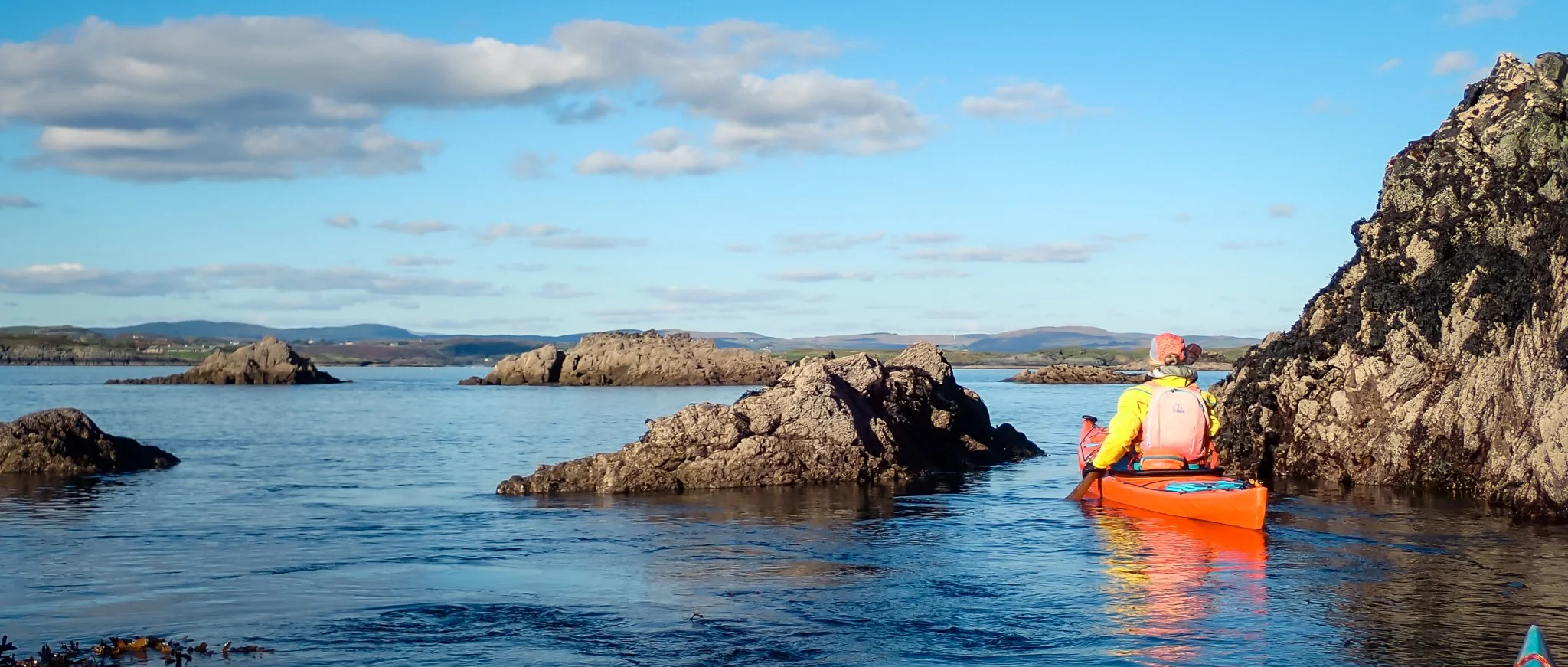
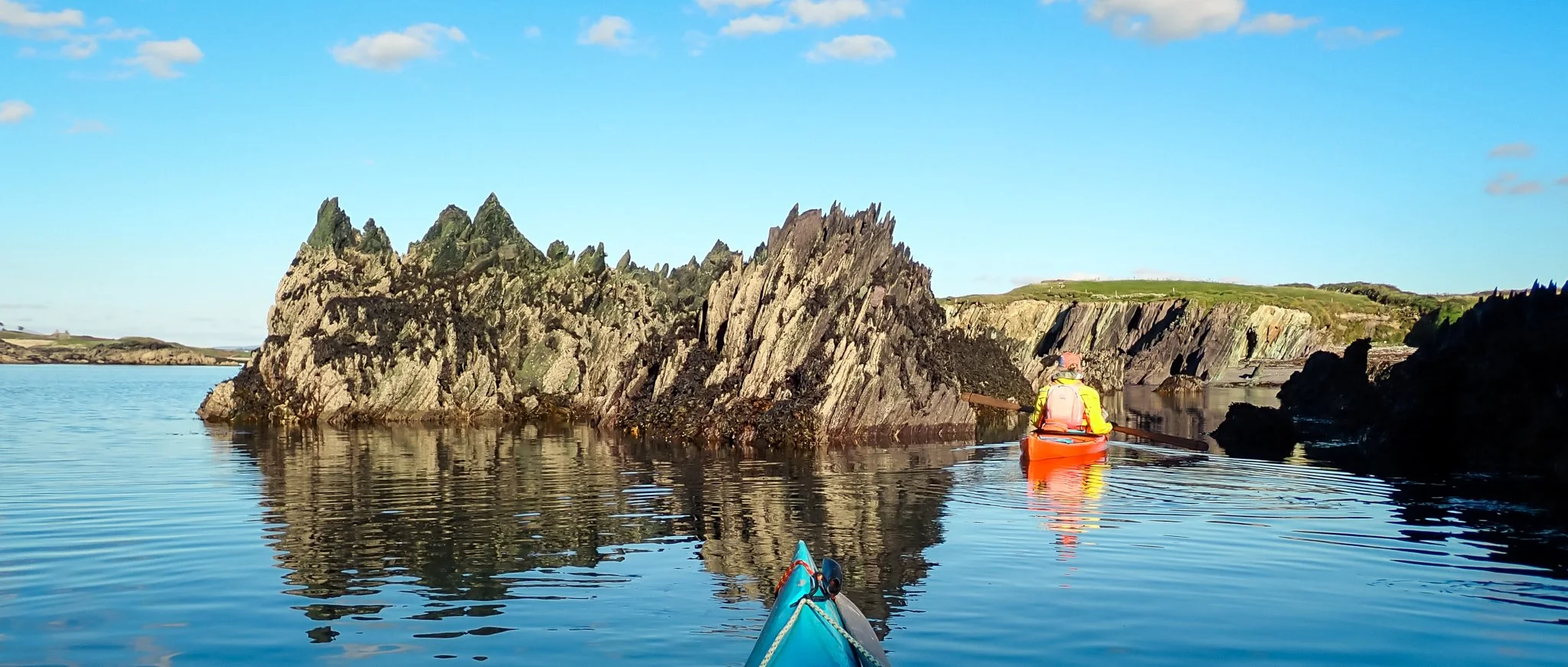
For our second paddle trip, we put in at Colla Pier, mid-point along the Long Island sound. We wanted to hug the coastline and explore Croagh Bay and to head west to Leamcon Castle. A nice stretch with some interesting rock hopping features.
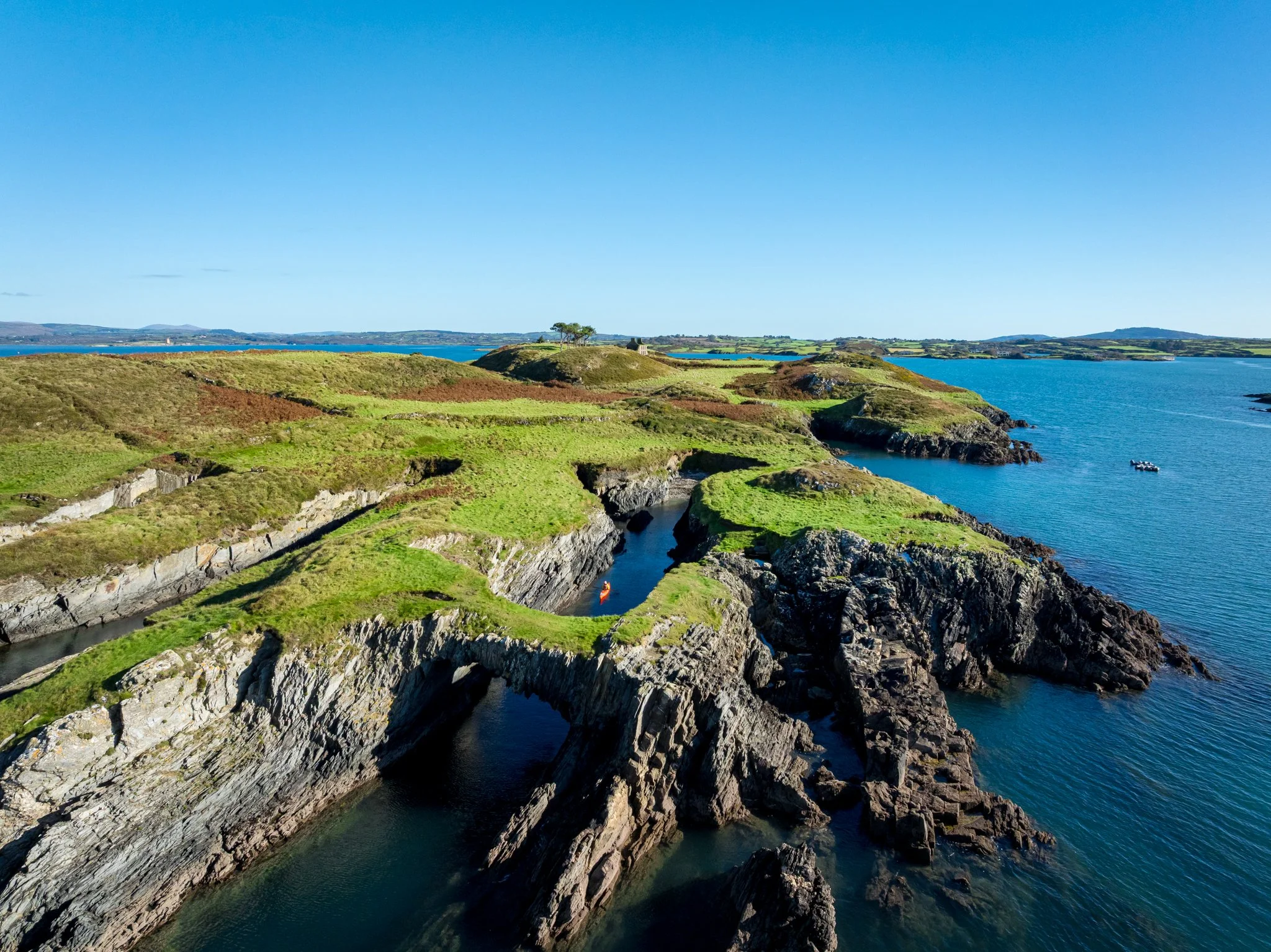
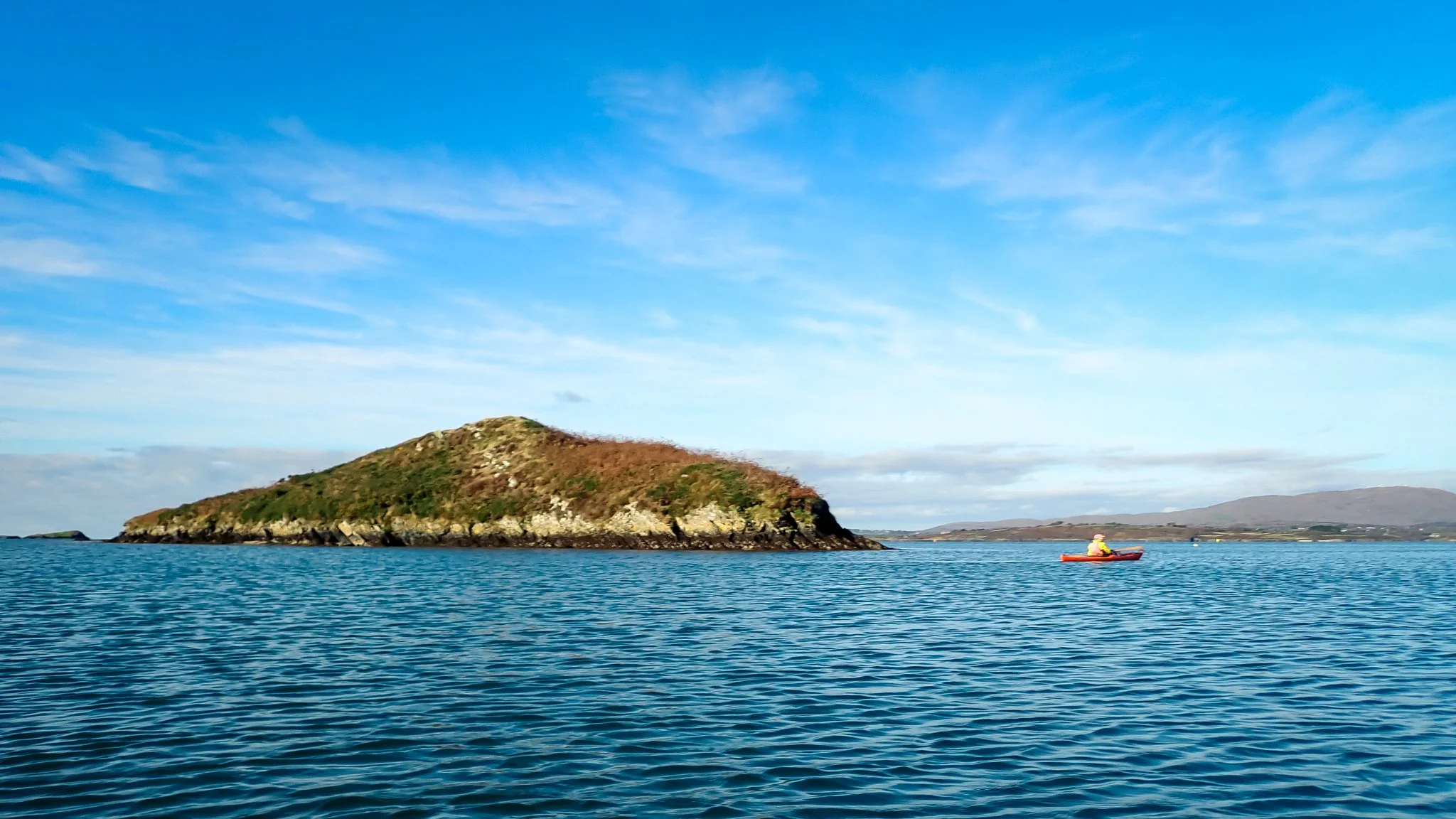
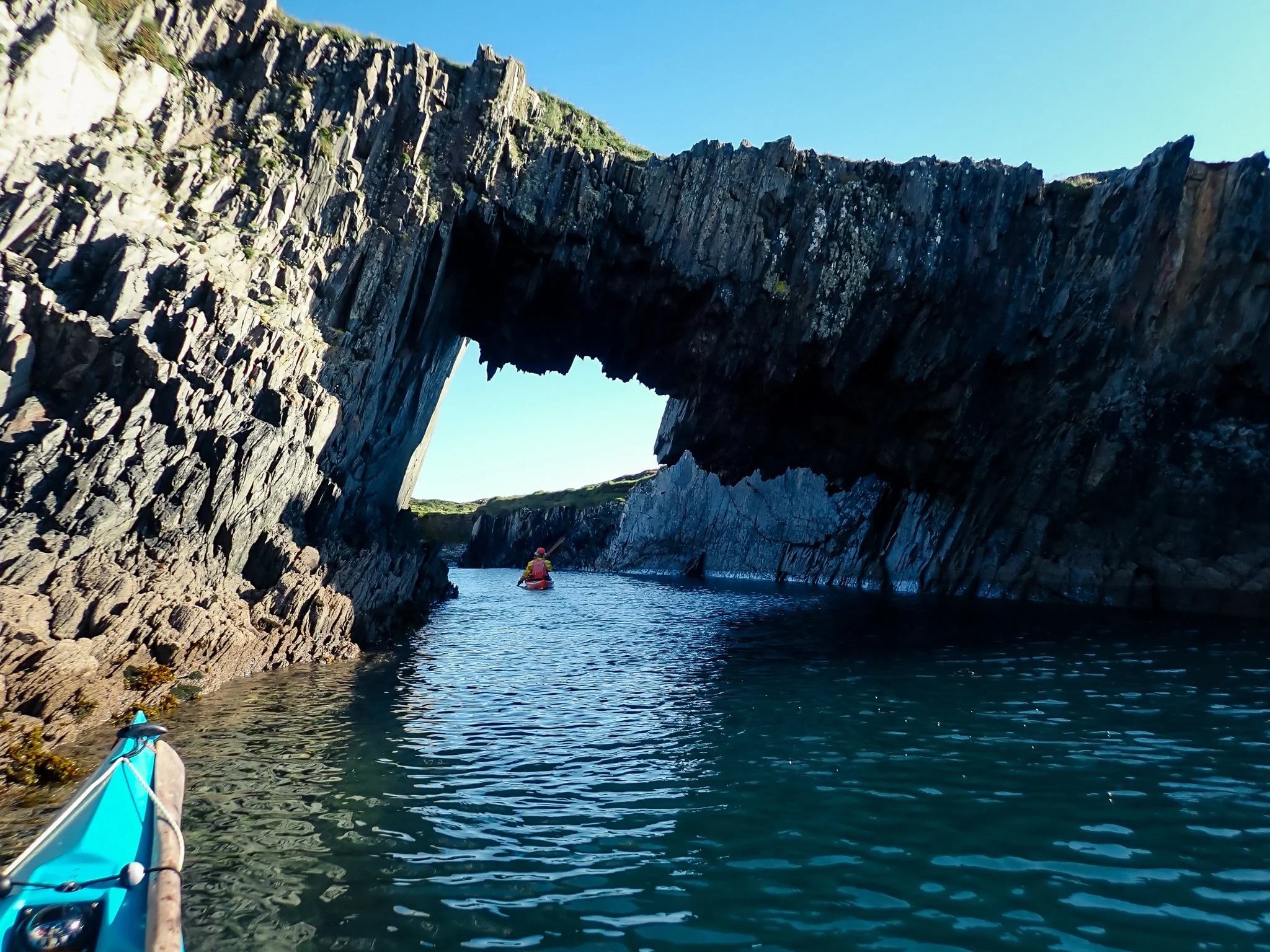
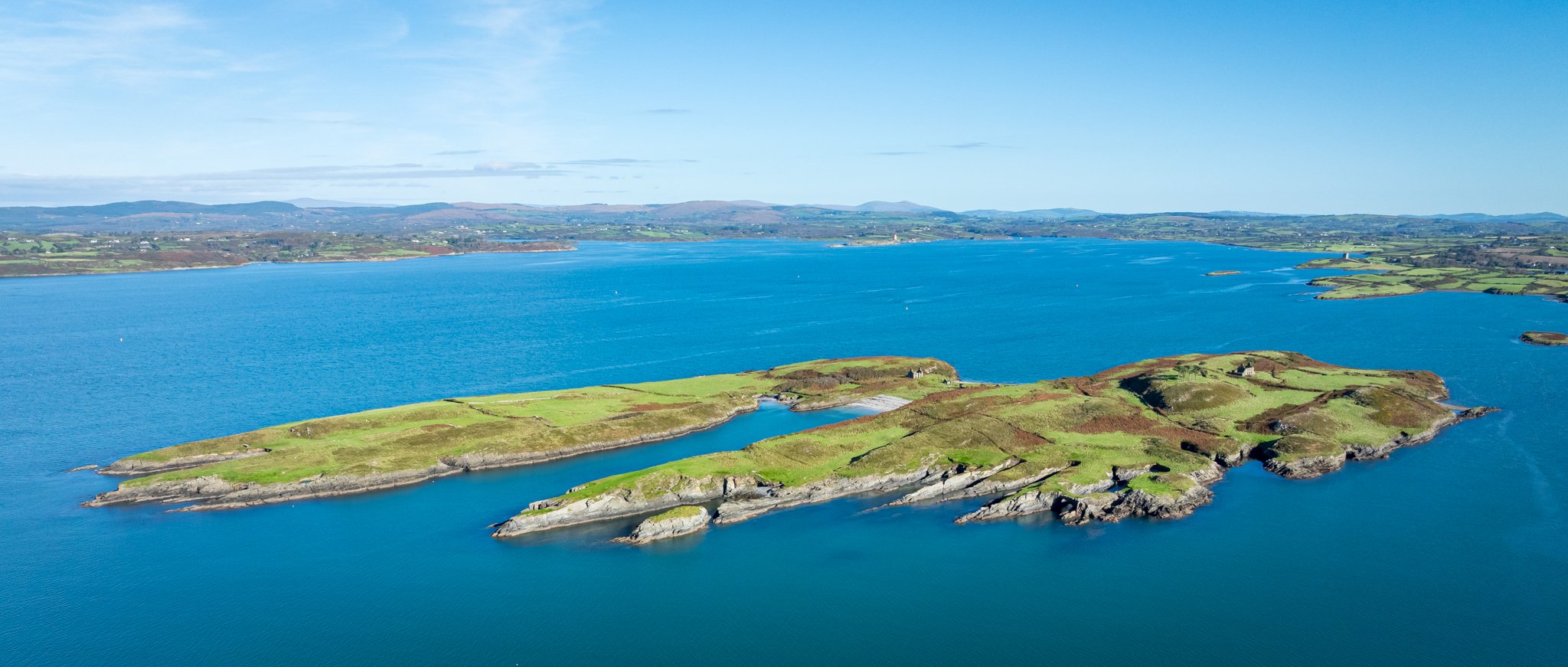
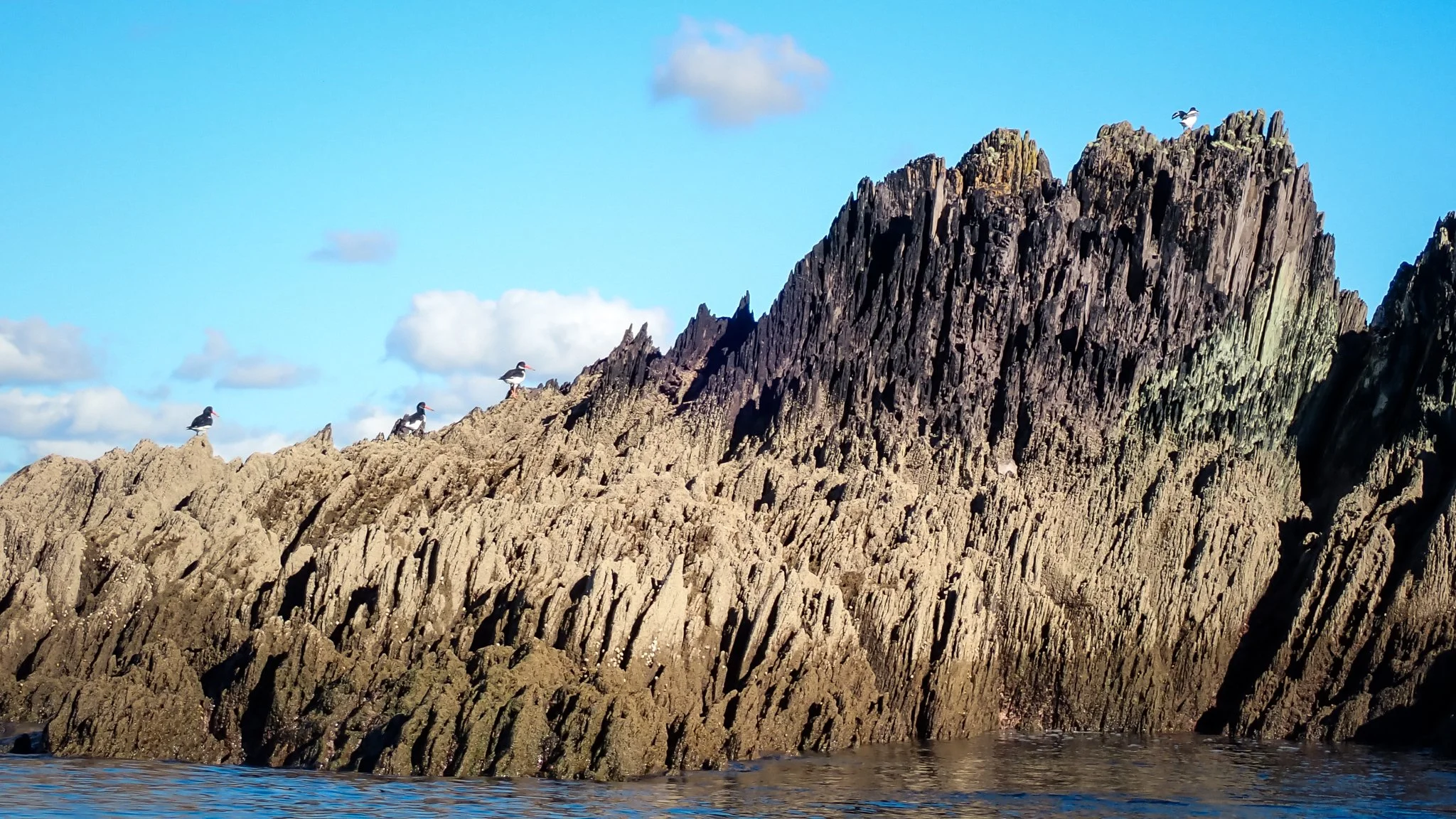
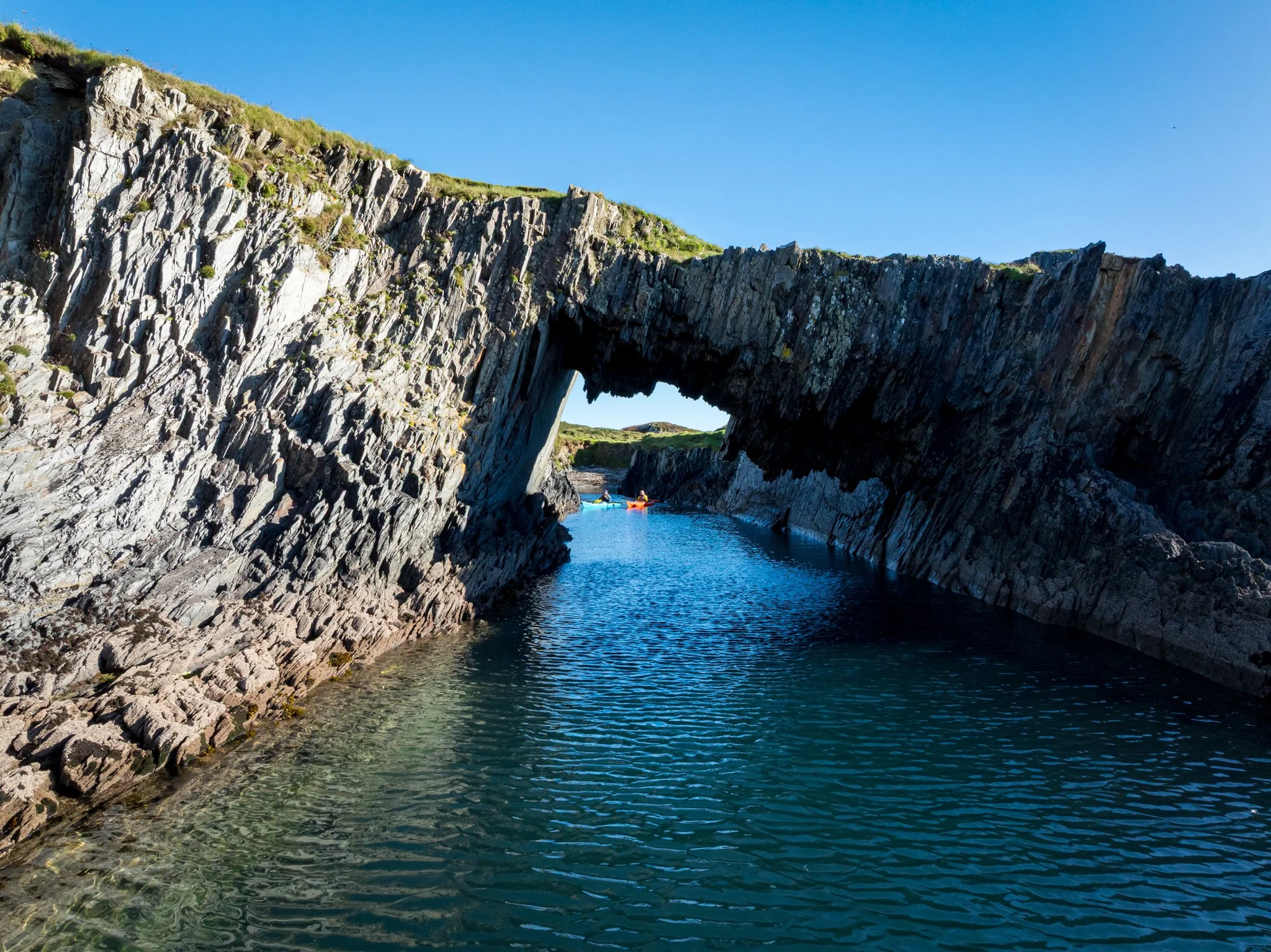
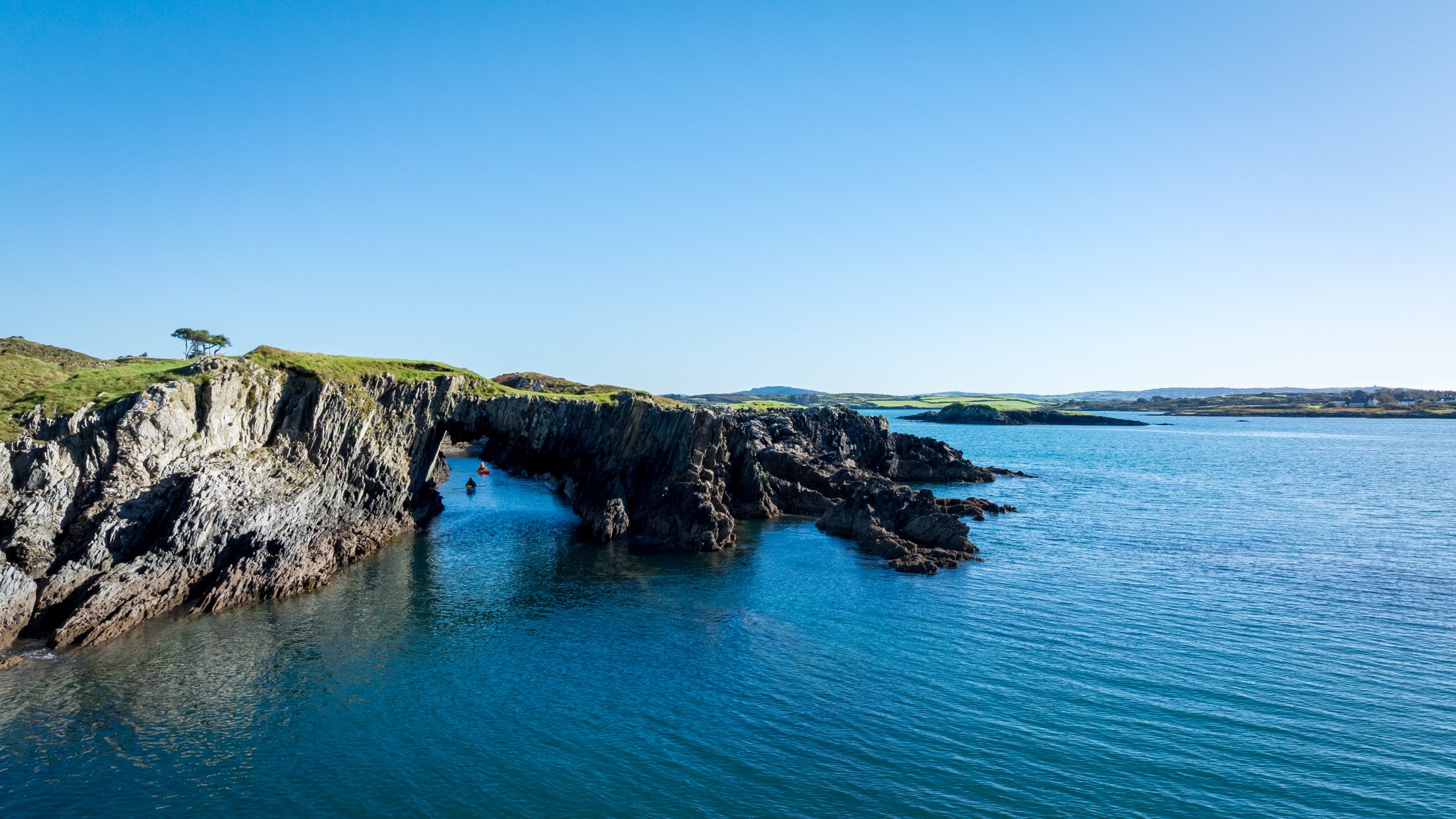
Looping around Dromadda, Carrignashoggee and Illaunricmonia islands and on through the Man-of-War Sound, to one of our favourites in Long Island Bay — Goat Island! The dual island is split to on an east/west axis with a smaller section to the south (Goat Island Little). The main island is waisted, with a tall sea arch. You can imagine that in time Goat Island will be in three sections.
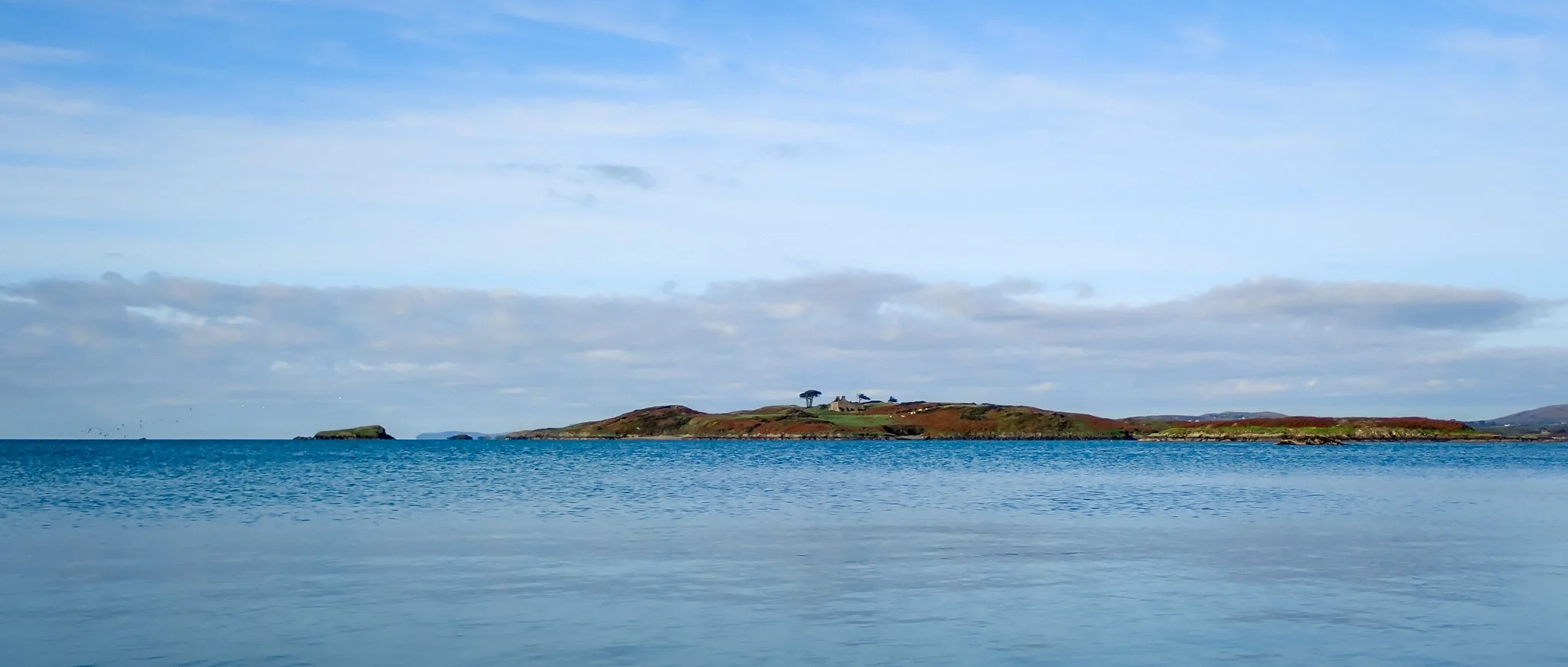
There is a small landing opportunity in the crook of the island at low tide. Time for a quick coffee and off again to Long Island. While the island is uninhabited, there is a hut on the main island and old maps indicate a cluster of buildings.
The herd of feral goats appear to be in robust health.


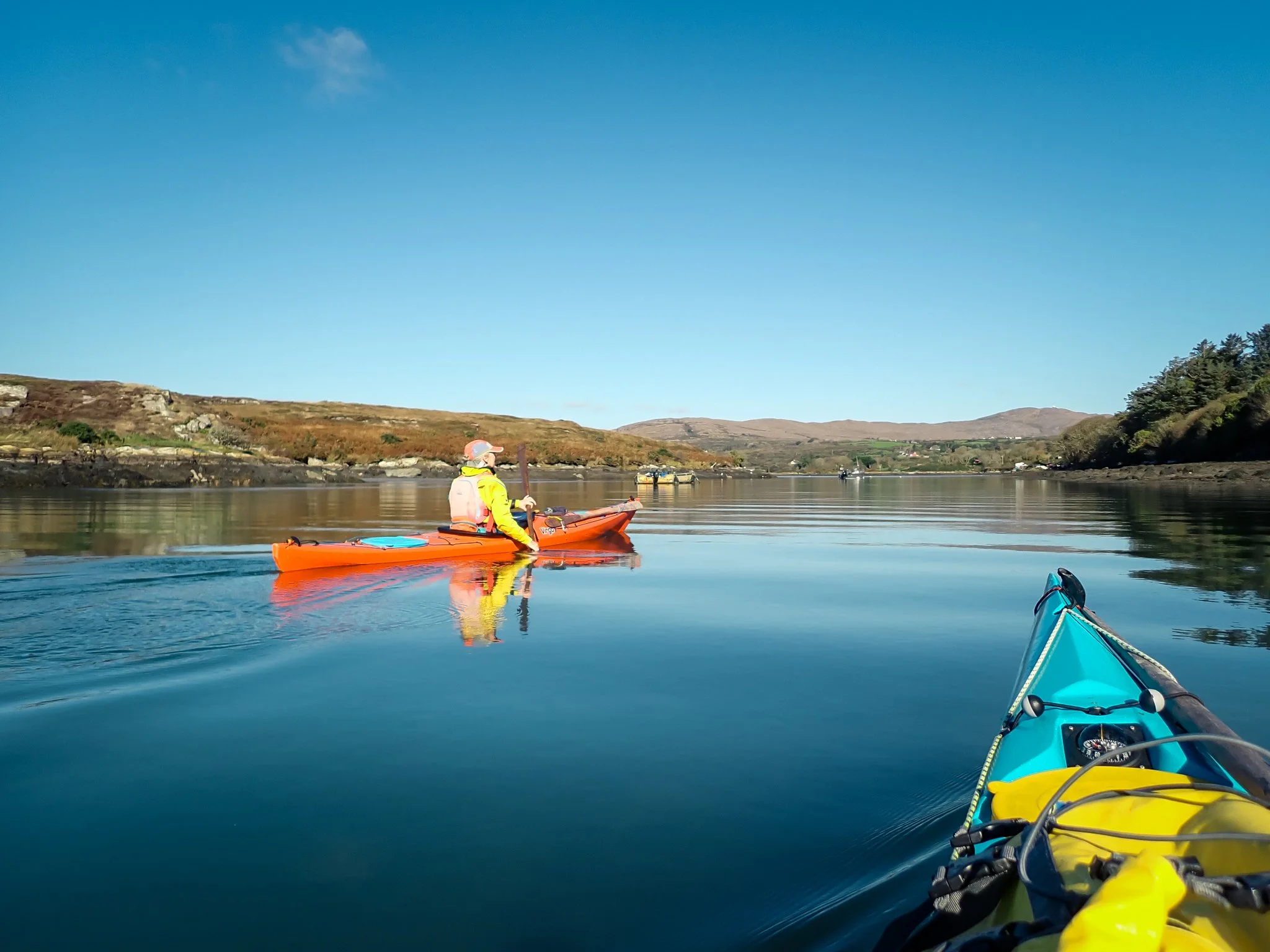
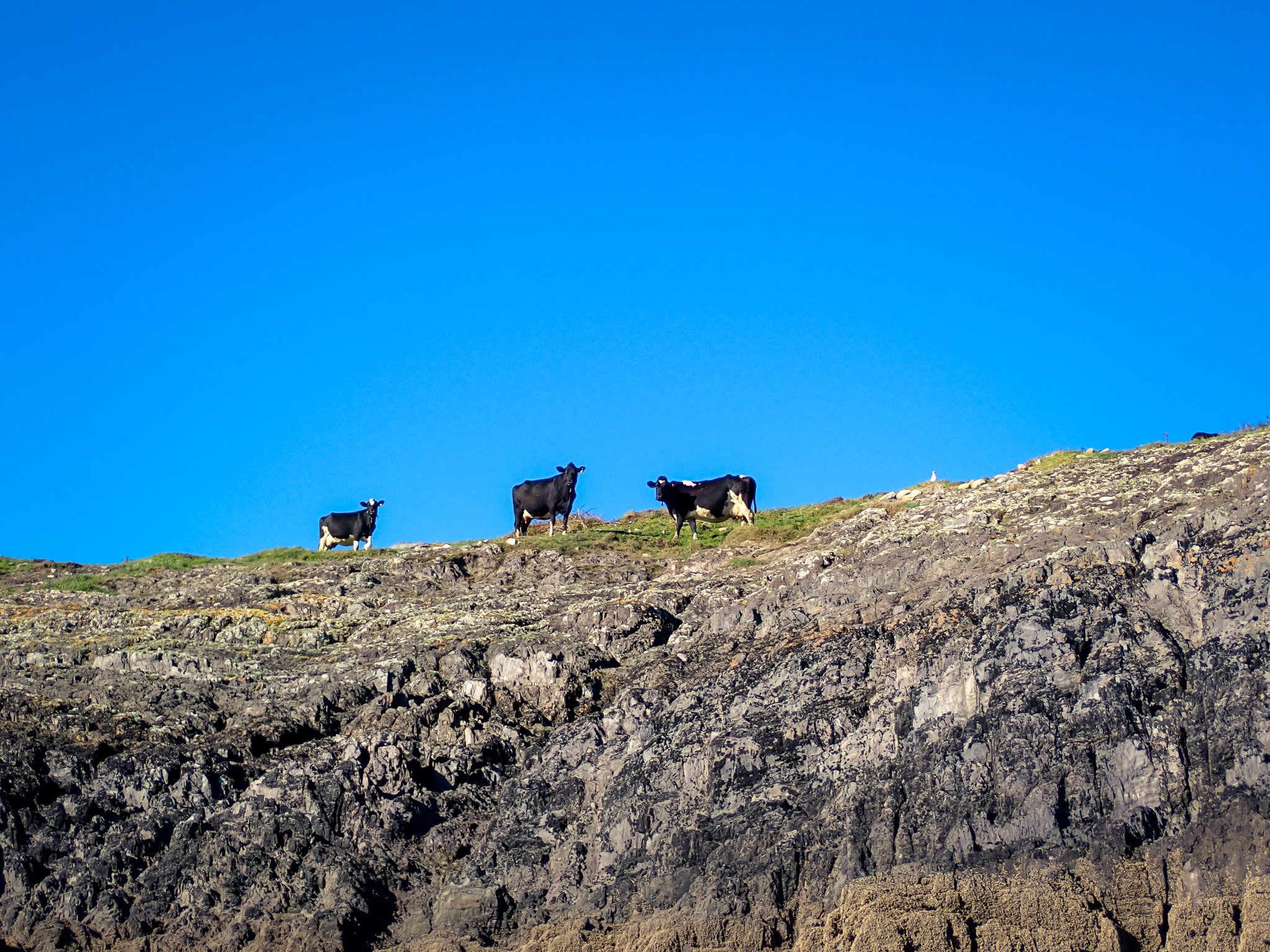
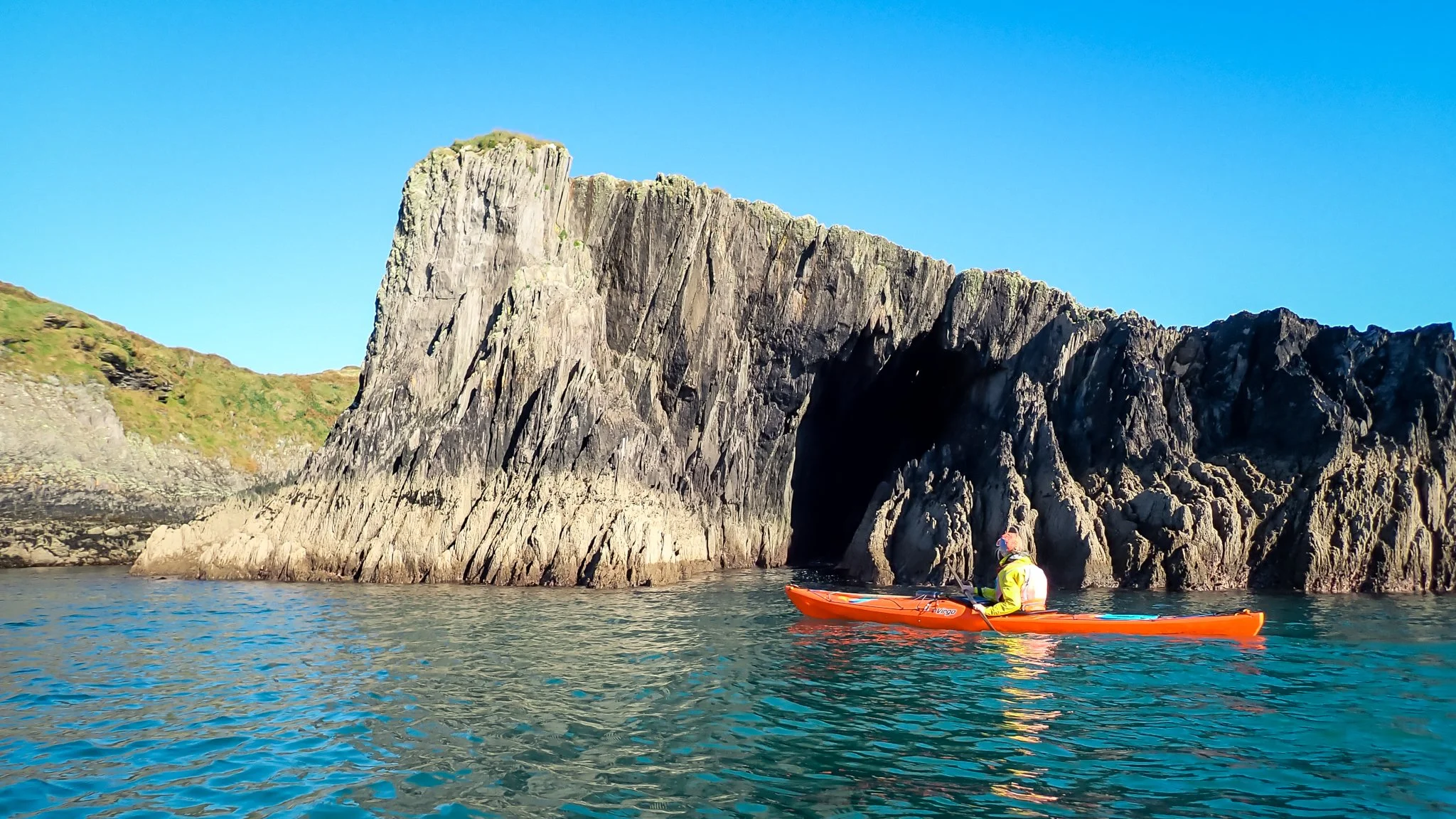
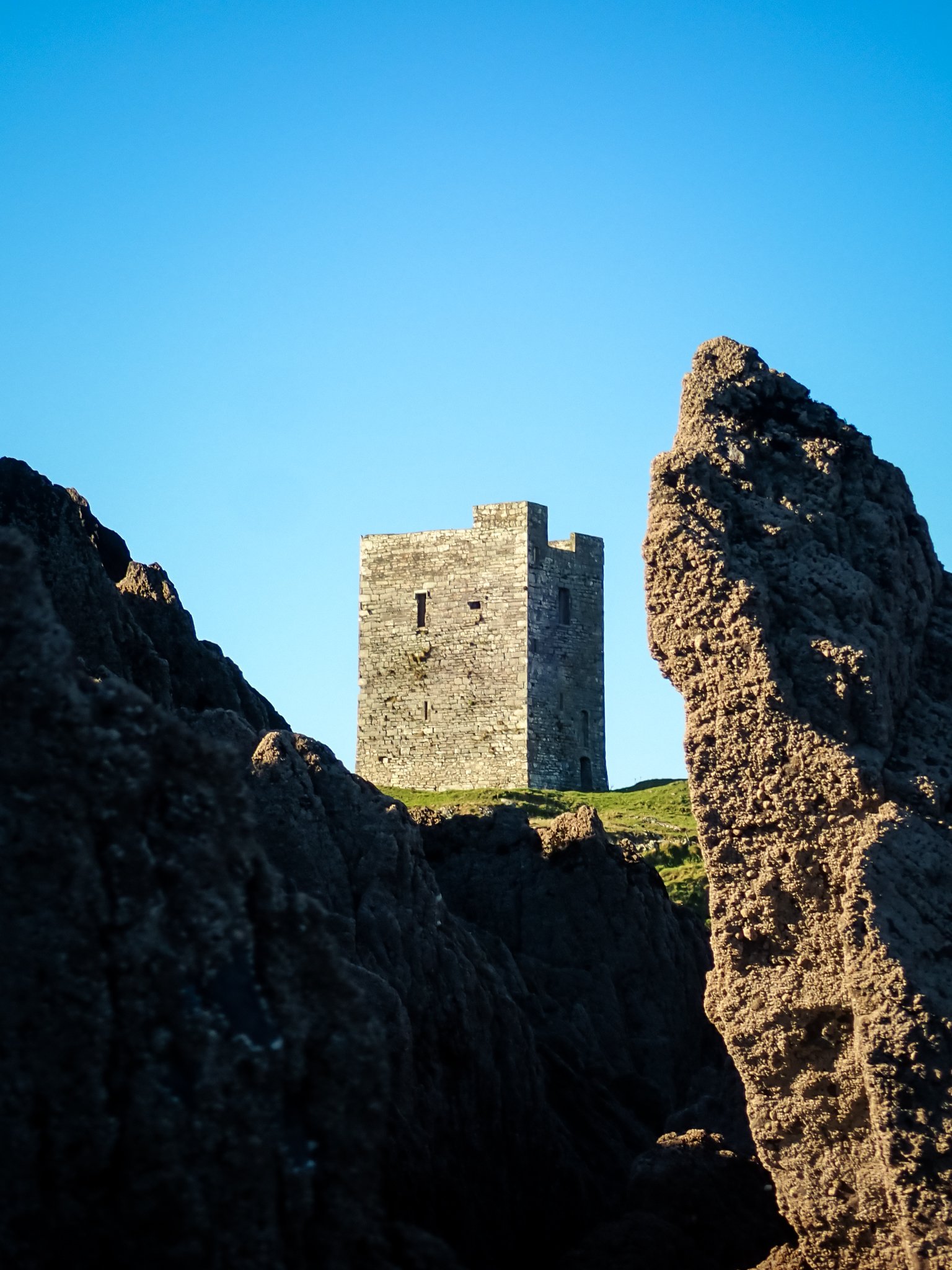
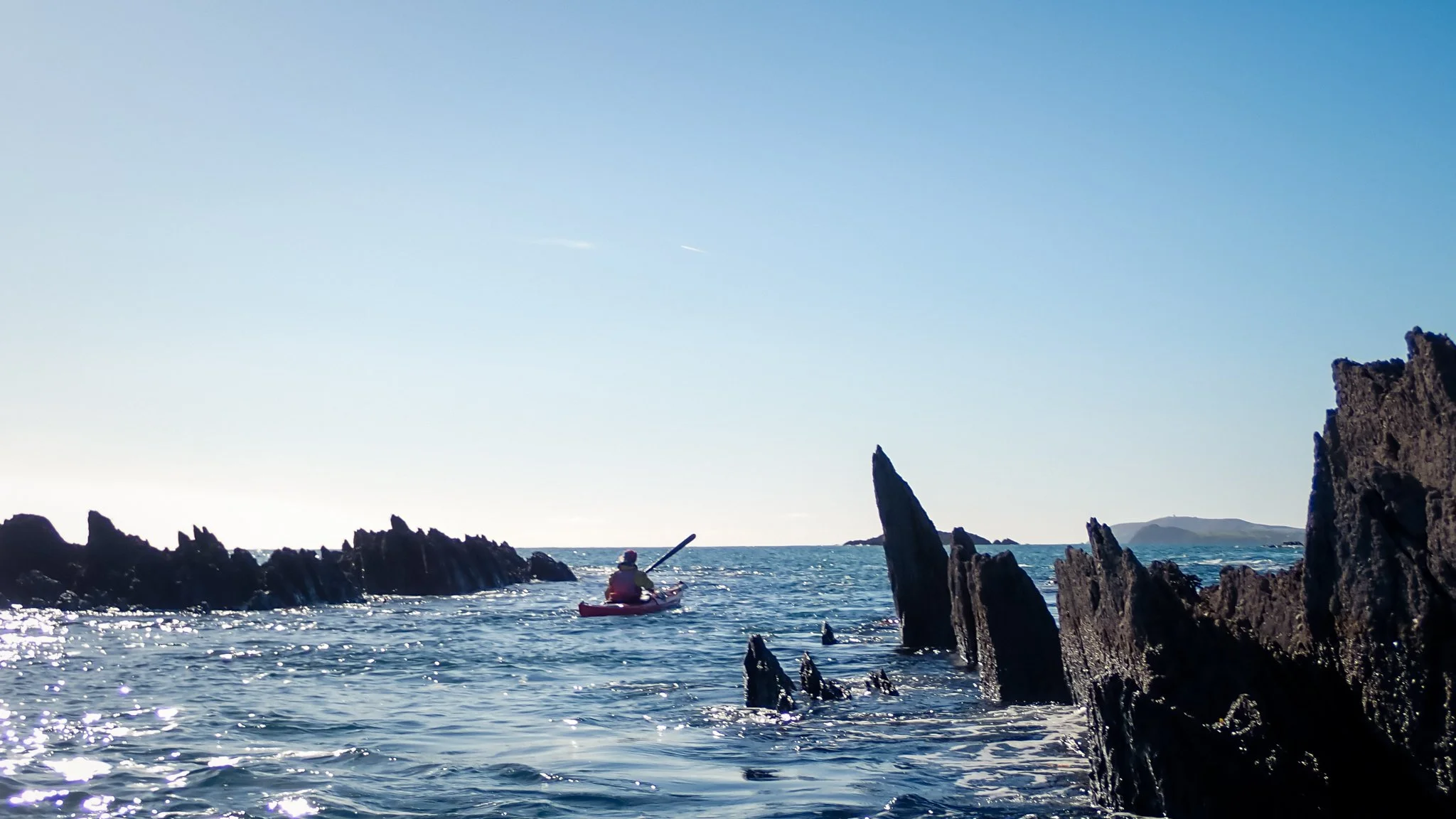
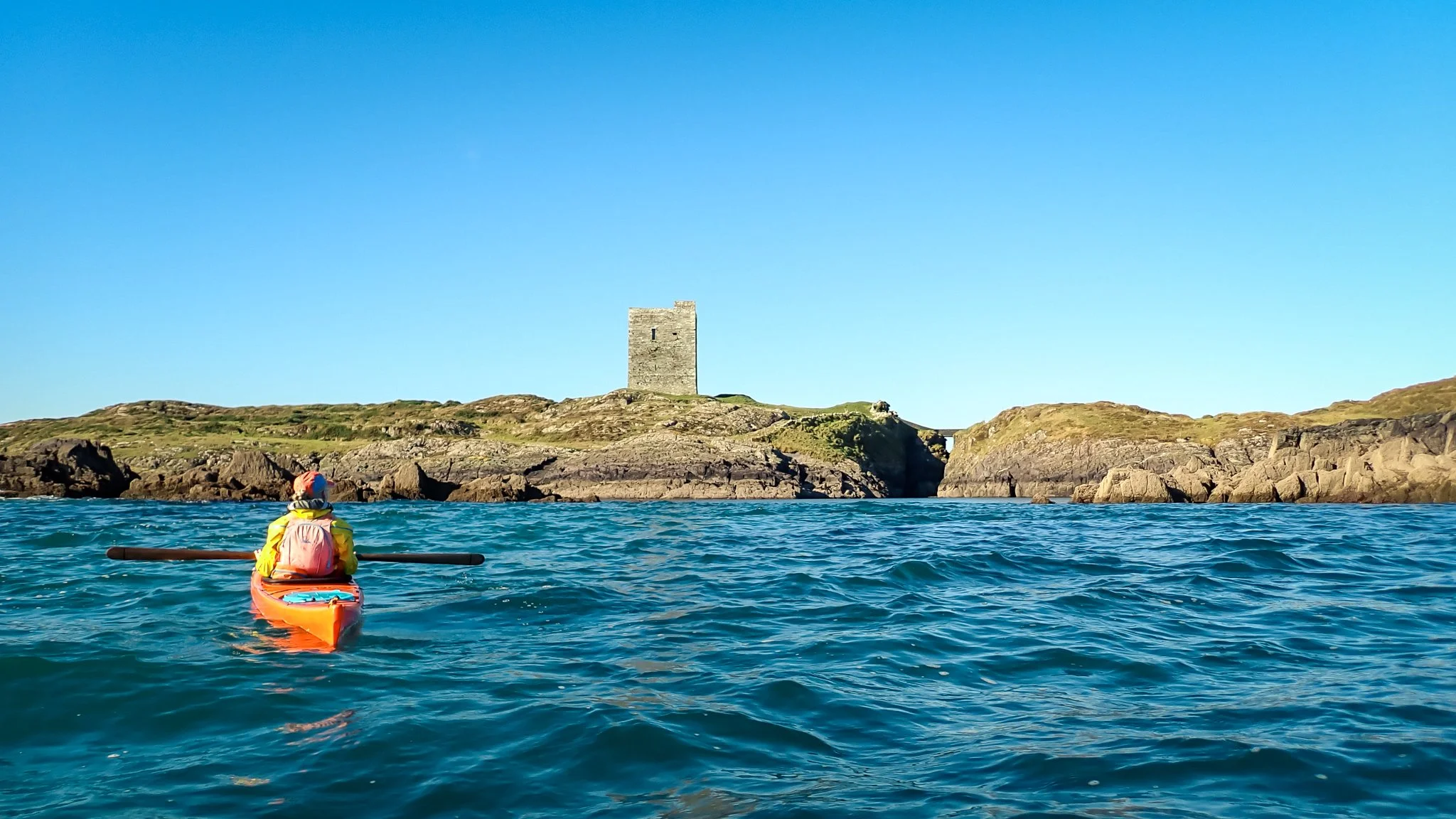
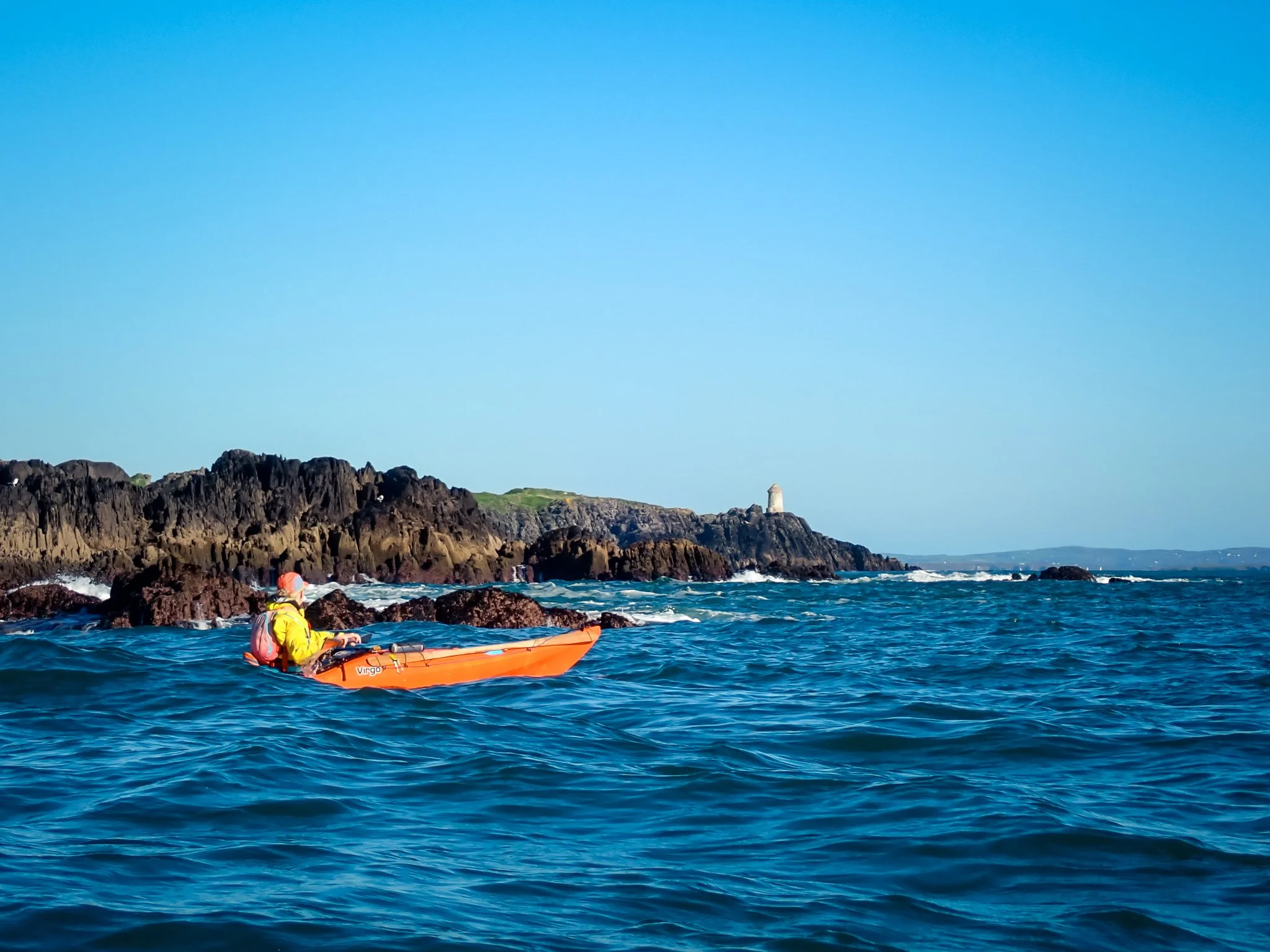
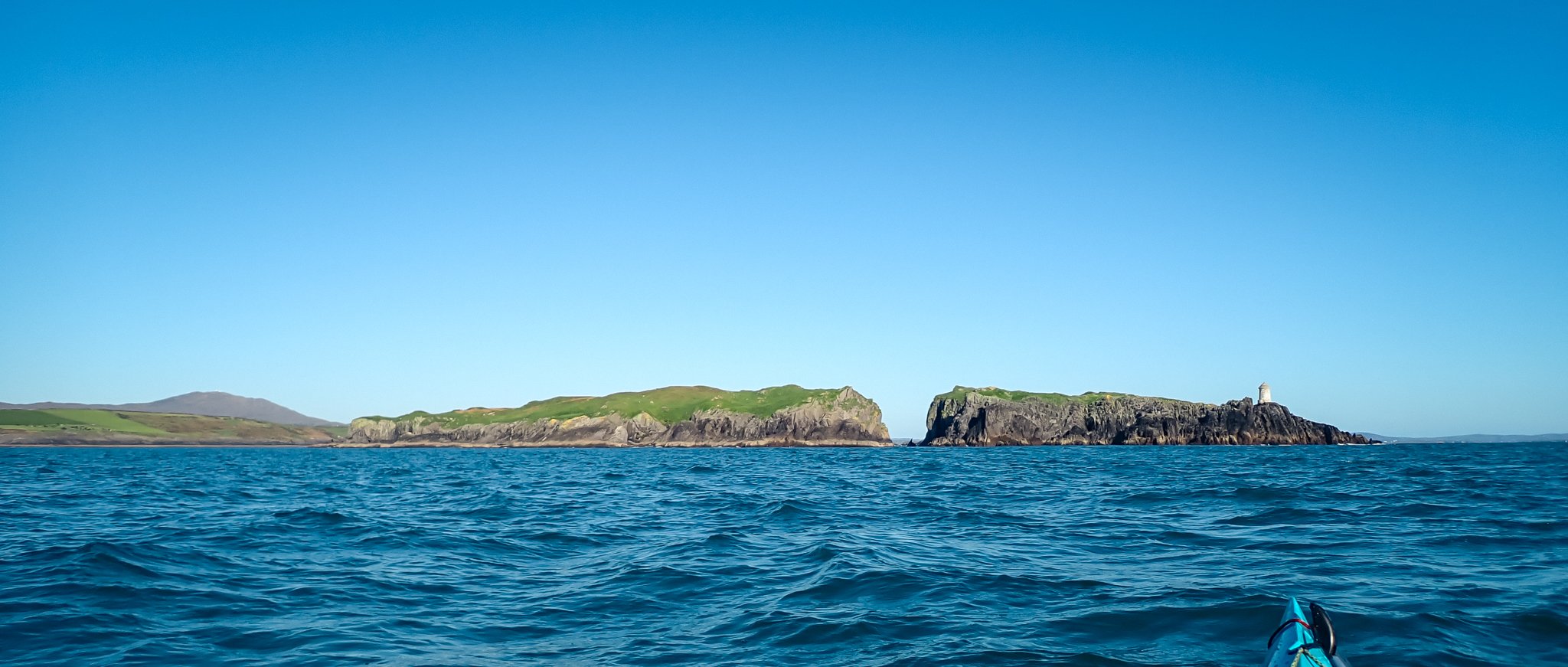
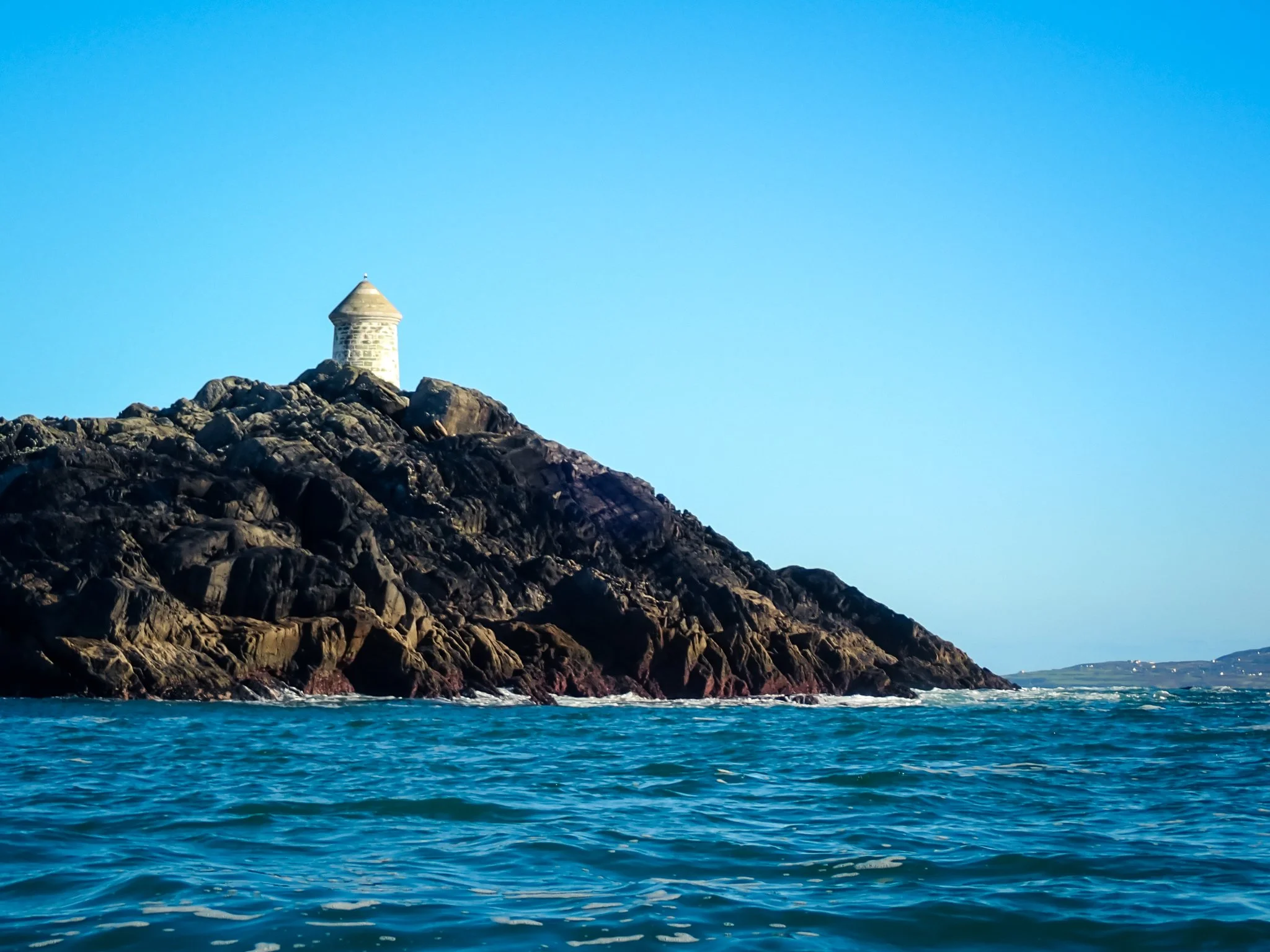
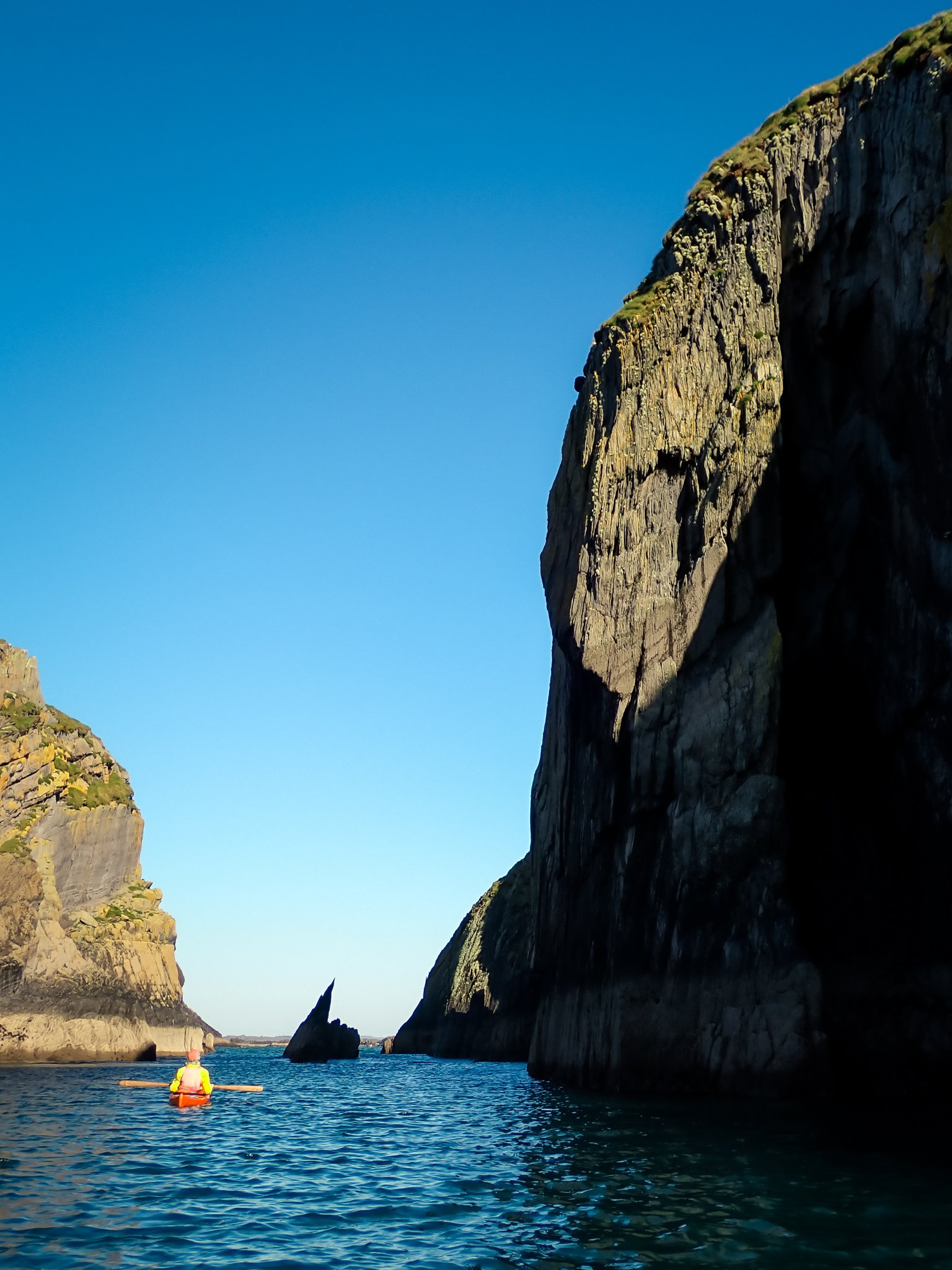
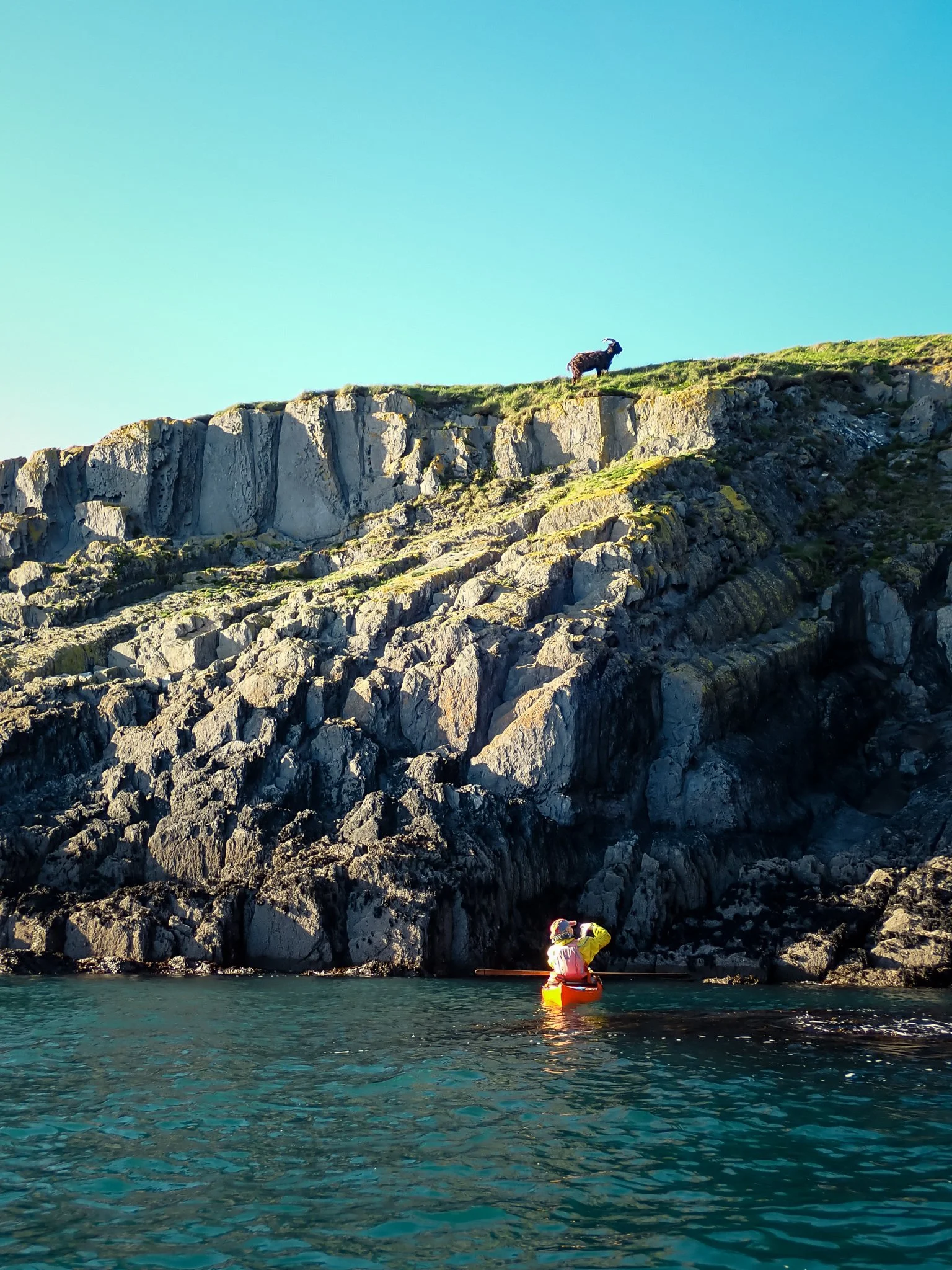
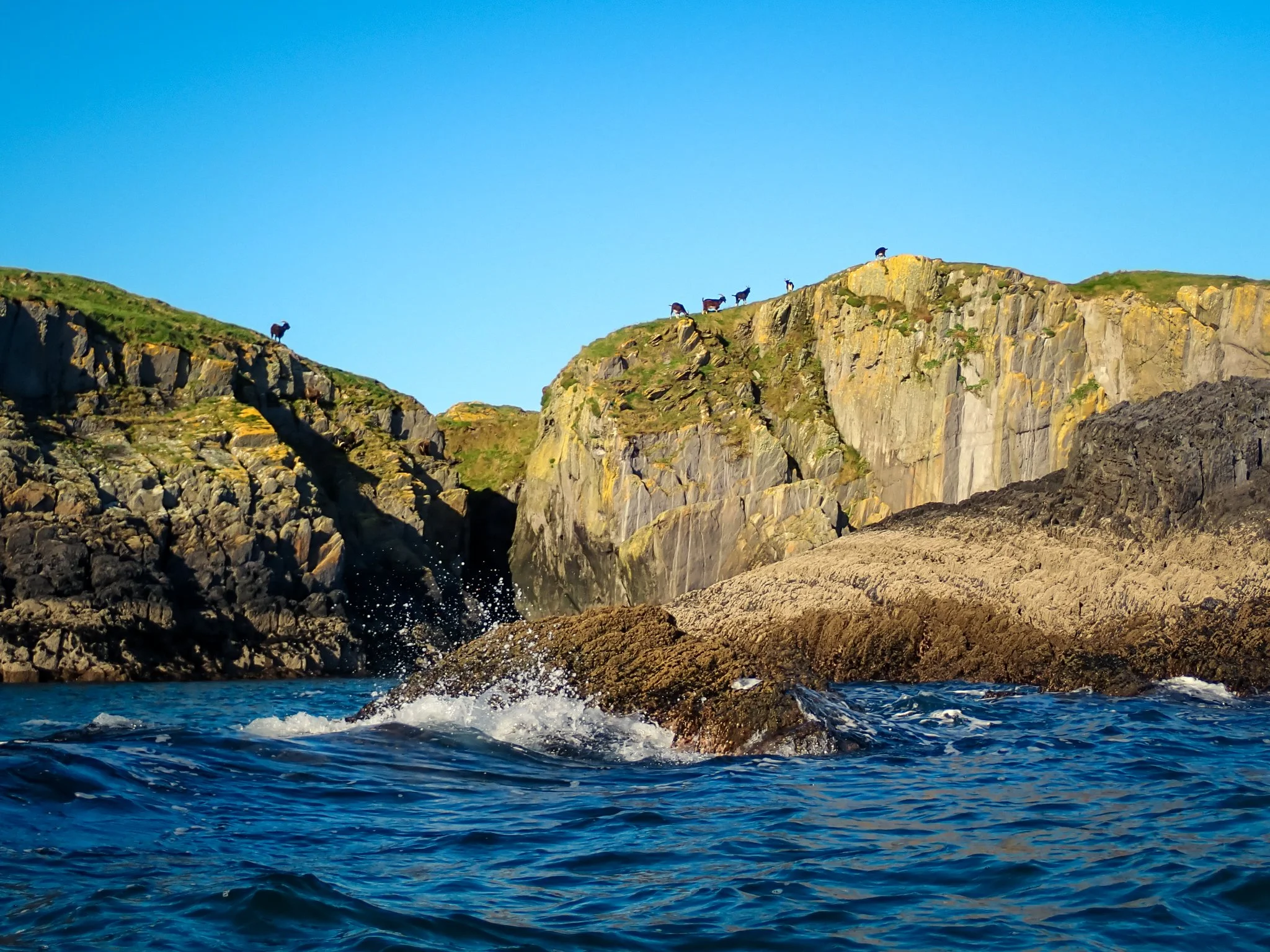
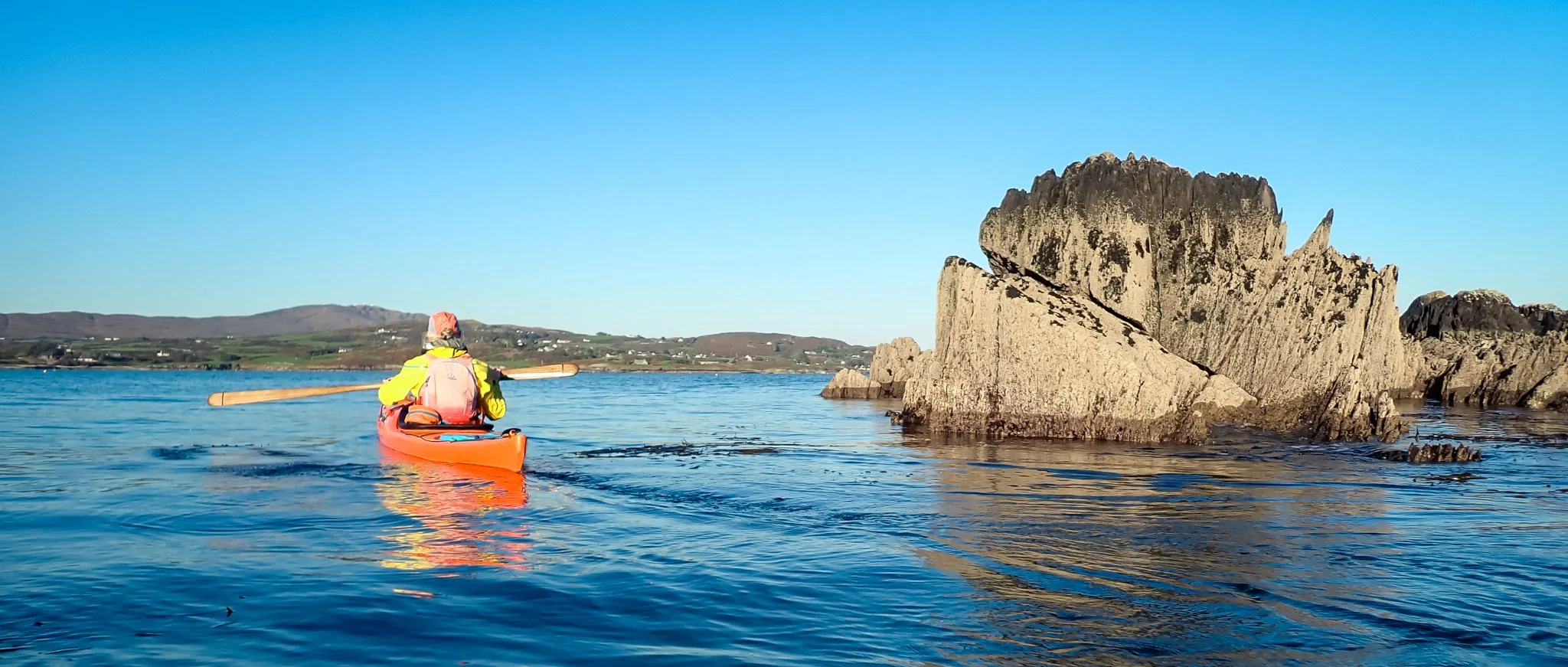
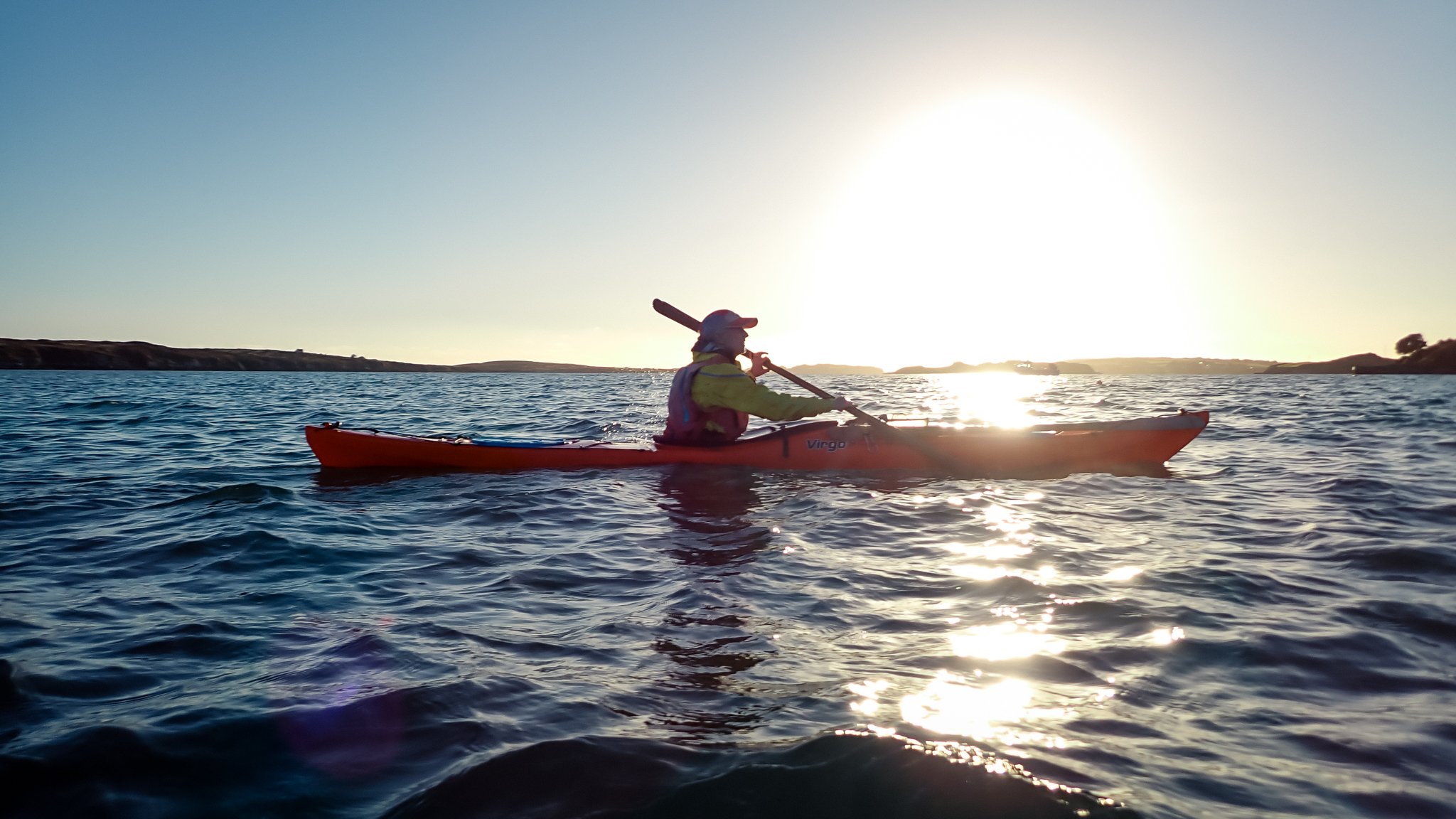
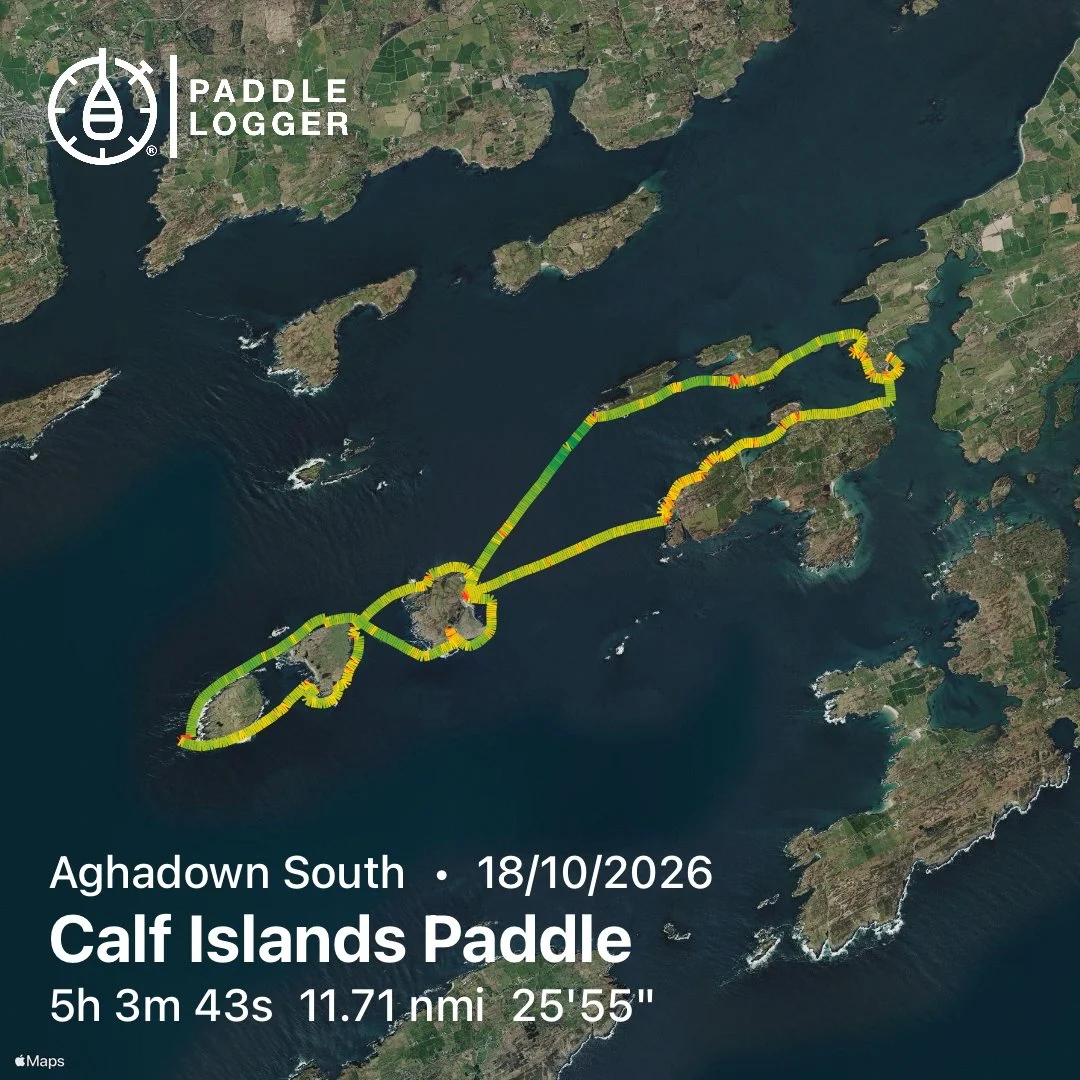
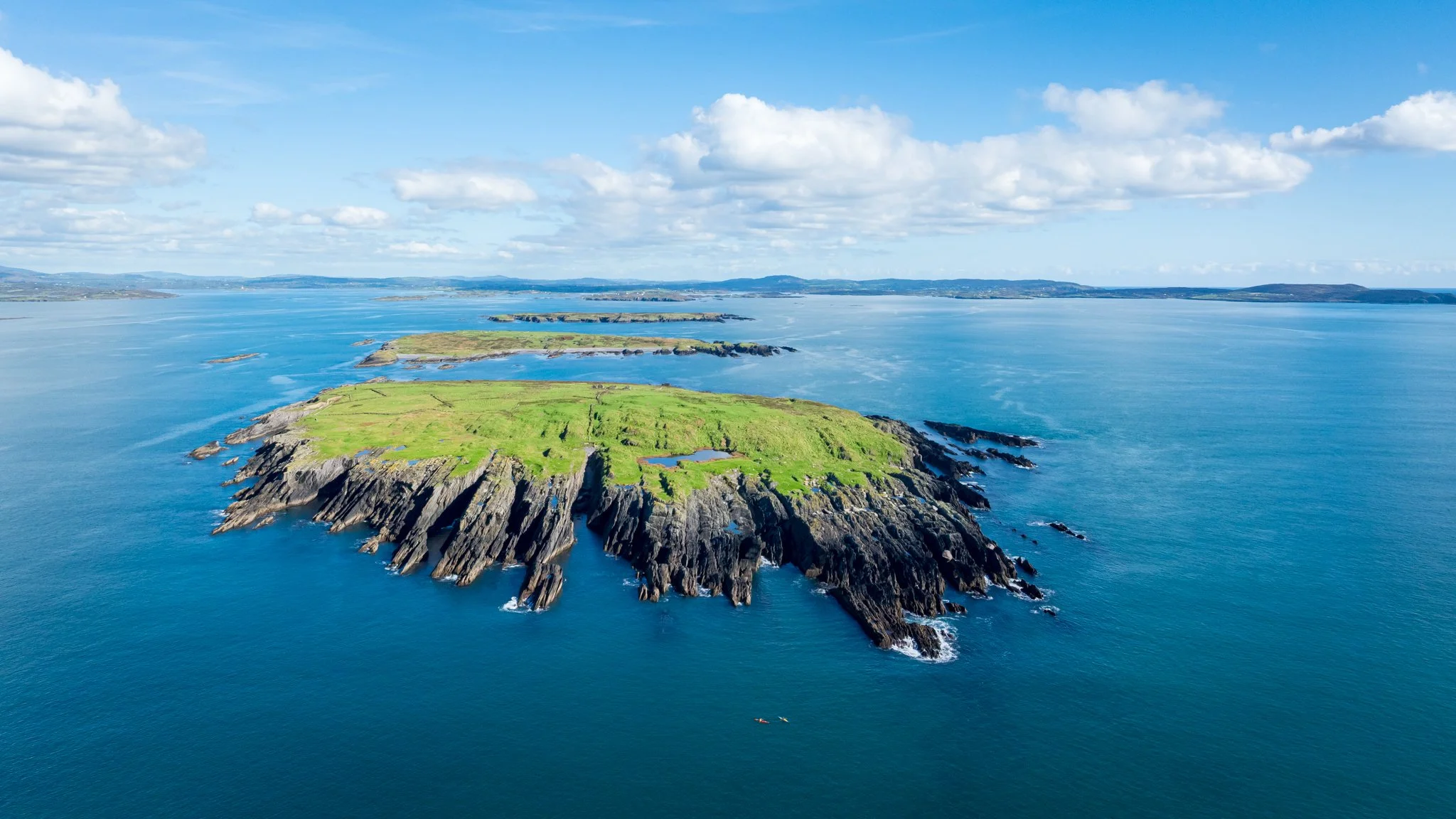
On the third day we put in at Cunnamore Pier, opposite Hare Island and headed for a loop along Skeam East and on to White Strand on Calf Island East for a mid-morning coffee break. The plan was to traverse down along the Calf Islands and loop back along Hare Island.
A ship went aground on Calf Island West, due to misidentification of the lighthouse on Rock Island, Crookhaven. From Shipwrecks of the Irish Coast Volume I: 1105-1993:
On 10 November 1847 the Stephen Whitney, a 1,034 ton American liner was wrecked on West Calf Island and 92 were drowned. Captain Popham sailed from New York on 18 October for Liverpool with 27 crew and 83 passengers. In dull and hazy weather Crookhaven was seen. The vessel slowed down and the depth was found to be 50 fathoms. With some difficulty the ship weathered the point and a light was observed. This was thought to be the Old Head of Kinsale. However it was Rock Island near Crookhaven. Though the light was in place for two years the crew were unaware of its existence. The ship crashed into a 30 foot high rock in the inlet at the west tip of West Calf Island. The entire side of the ship was stove in and she went to pieces in half an hour. Only 18 of those aboard managed to scramble up the rock and survive. The cargo was corn, cotton, cheese, rosin and 20 boxes of clocks. Though the disaster occurred on Wednesday night news only reached Skibereen 10 miles away on Friday evening. Conditions in that area were very bad as the famine was at its worst. As a result of this tragedy the decision to construct the Fastnet lighthouse was taken.
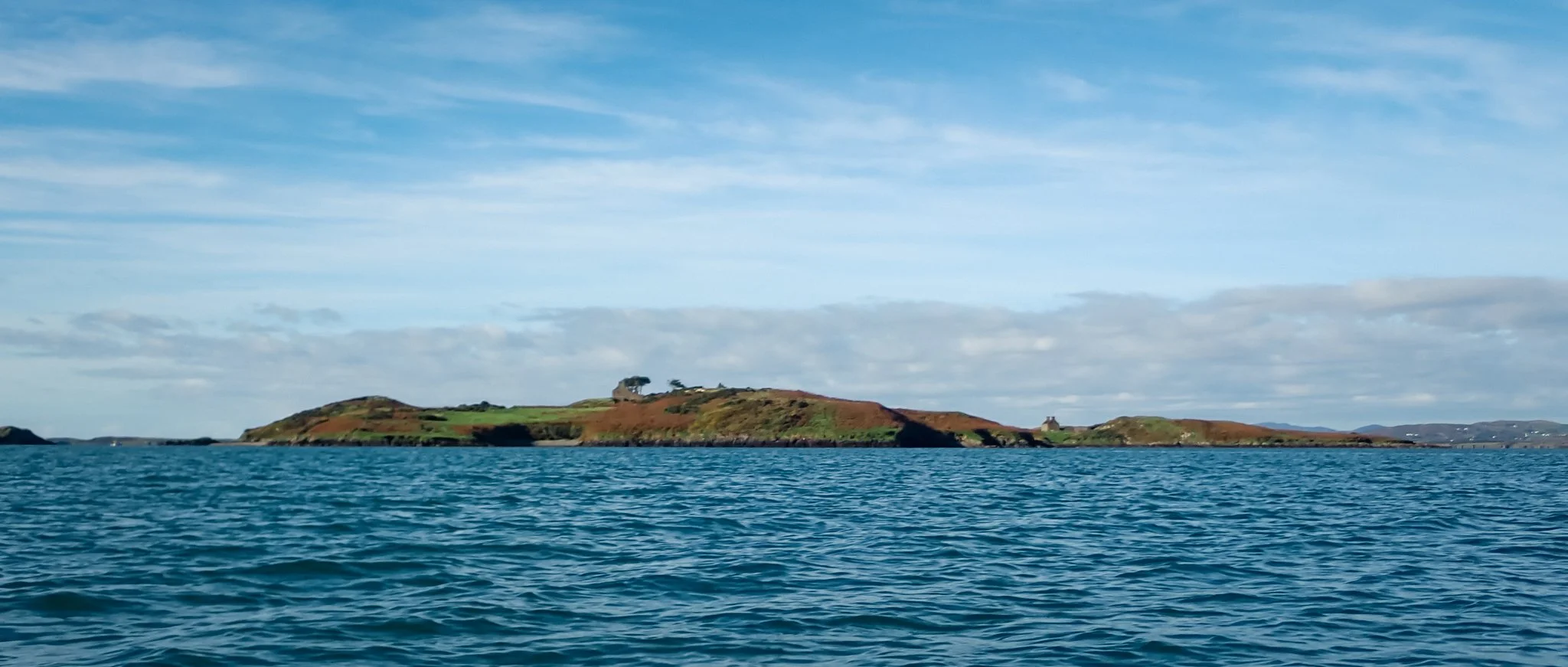
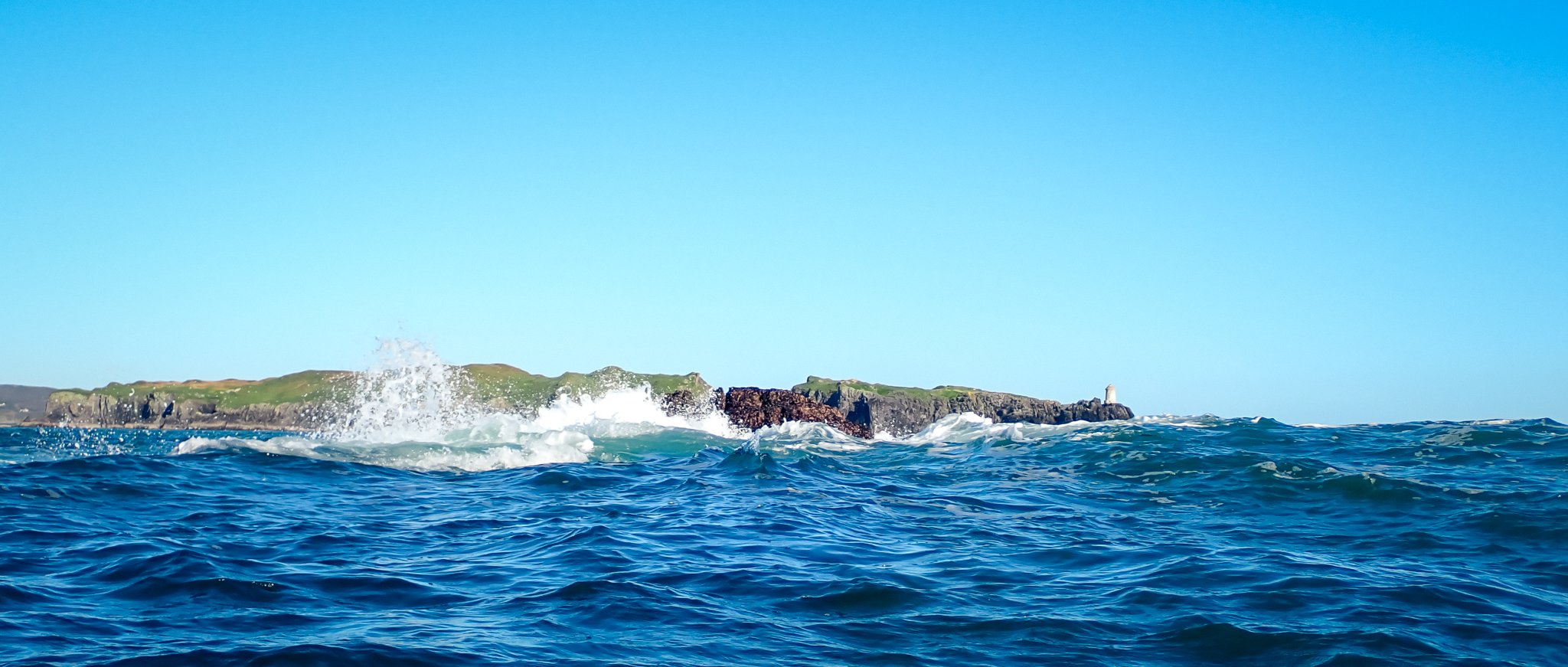
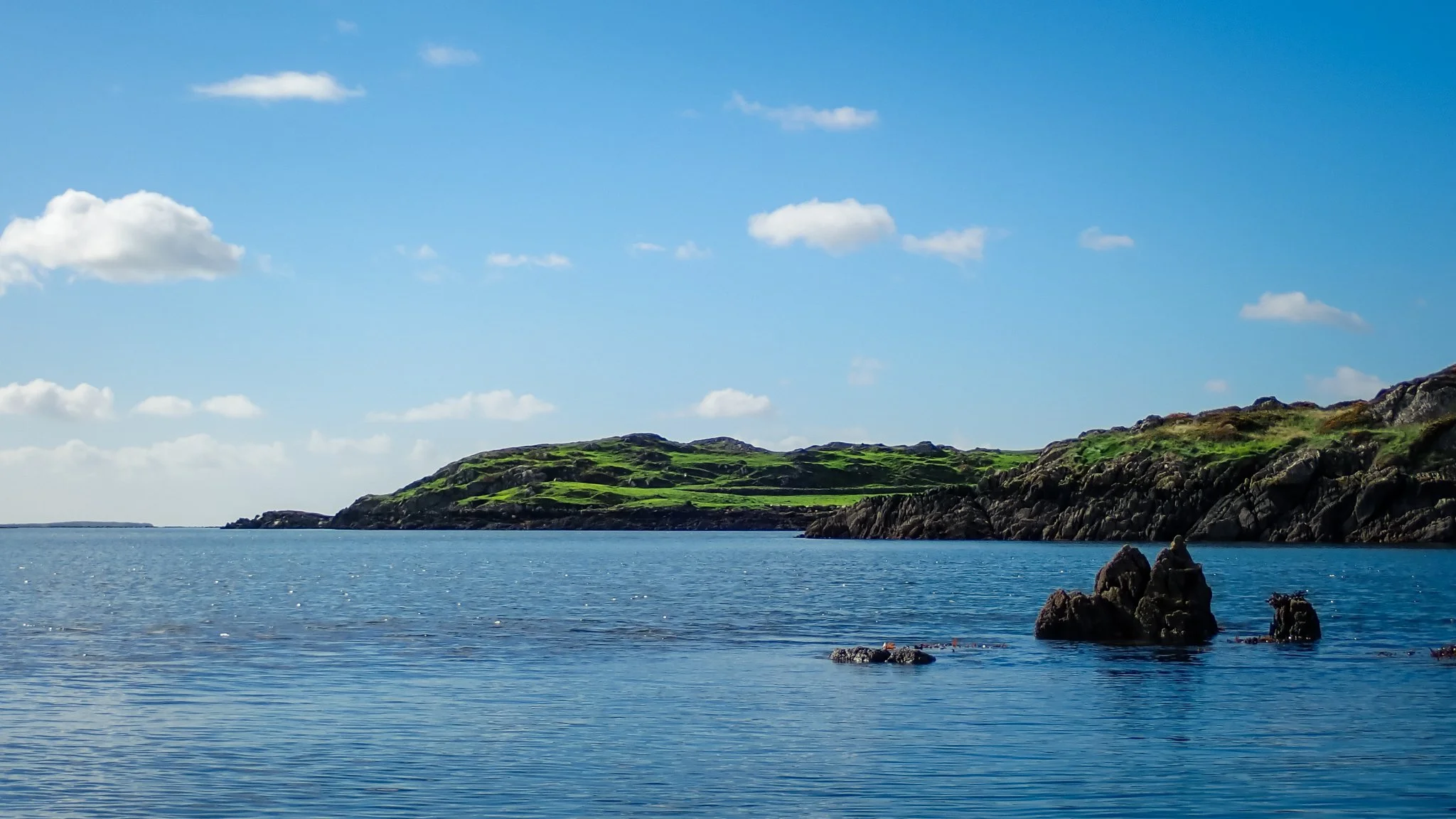
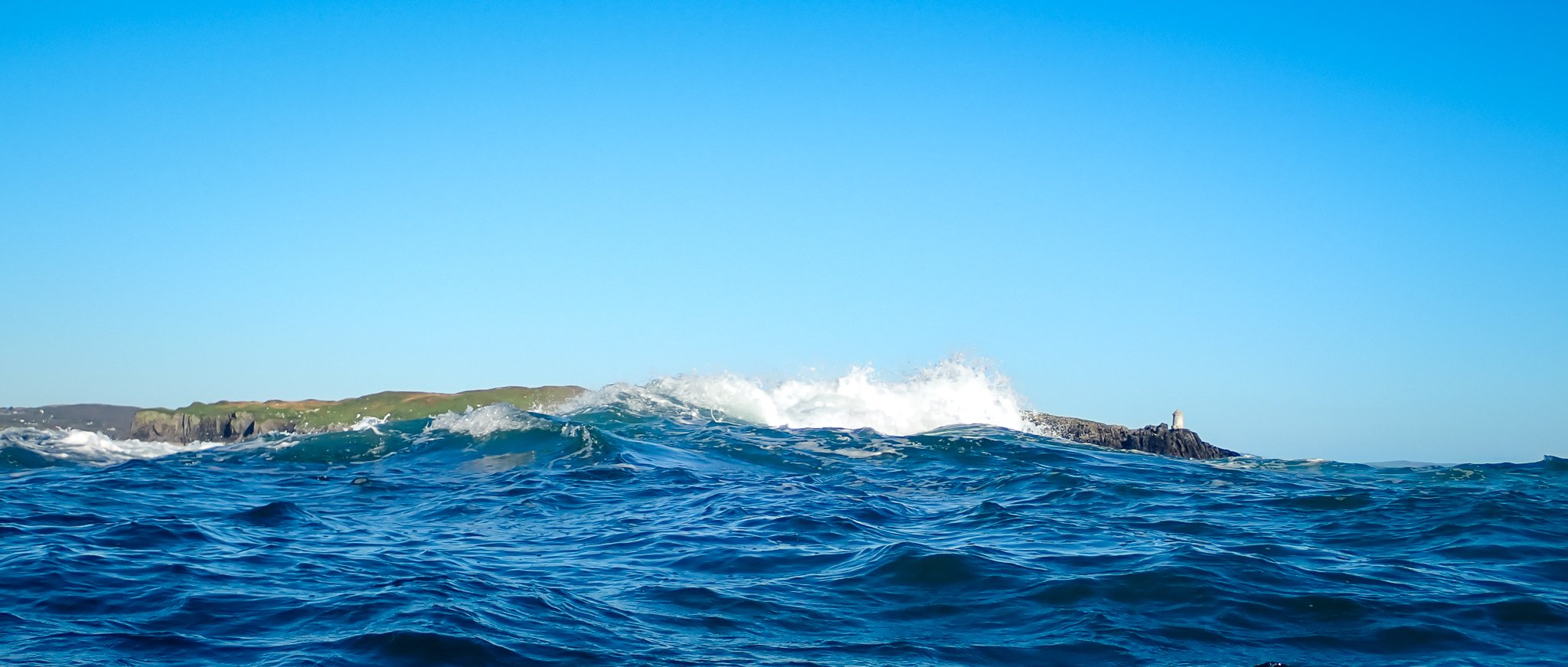
The first photograph is of West Calf Island, looking east.