
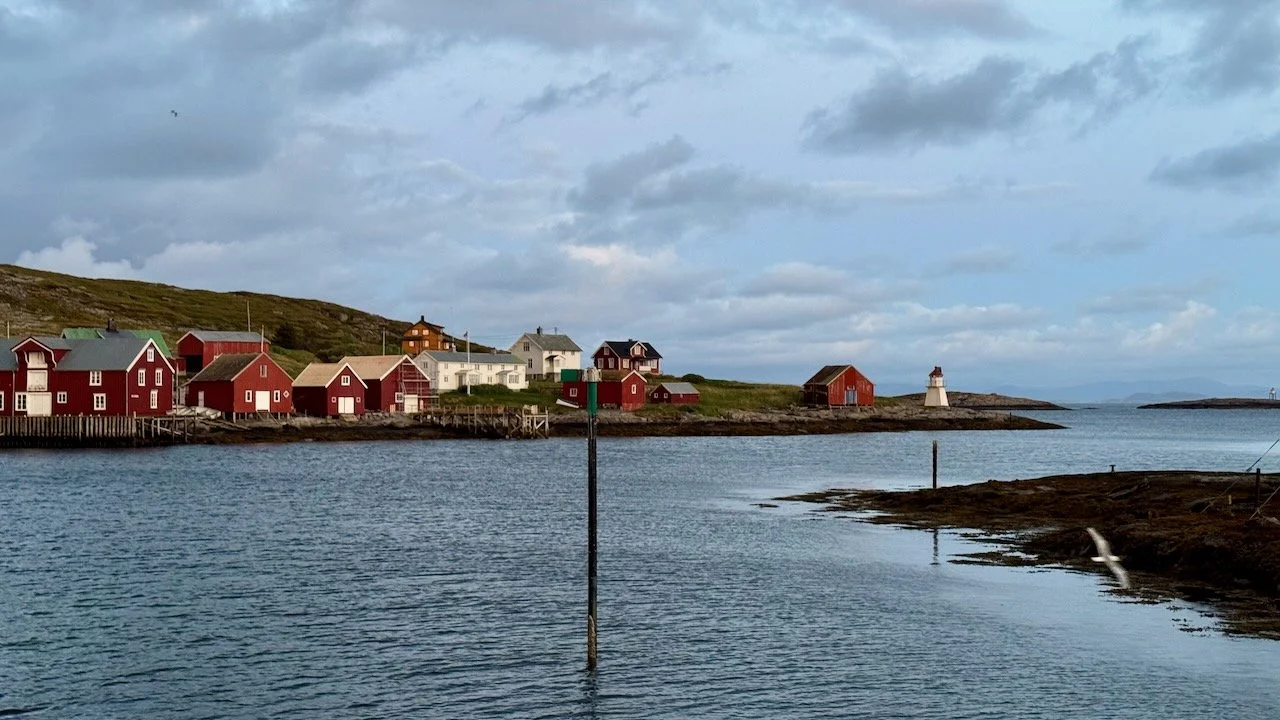
Flatholmen, Nakken, Lyngsnesholmen, Store Langøya & Lille Langøya connected via causeways
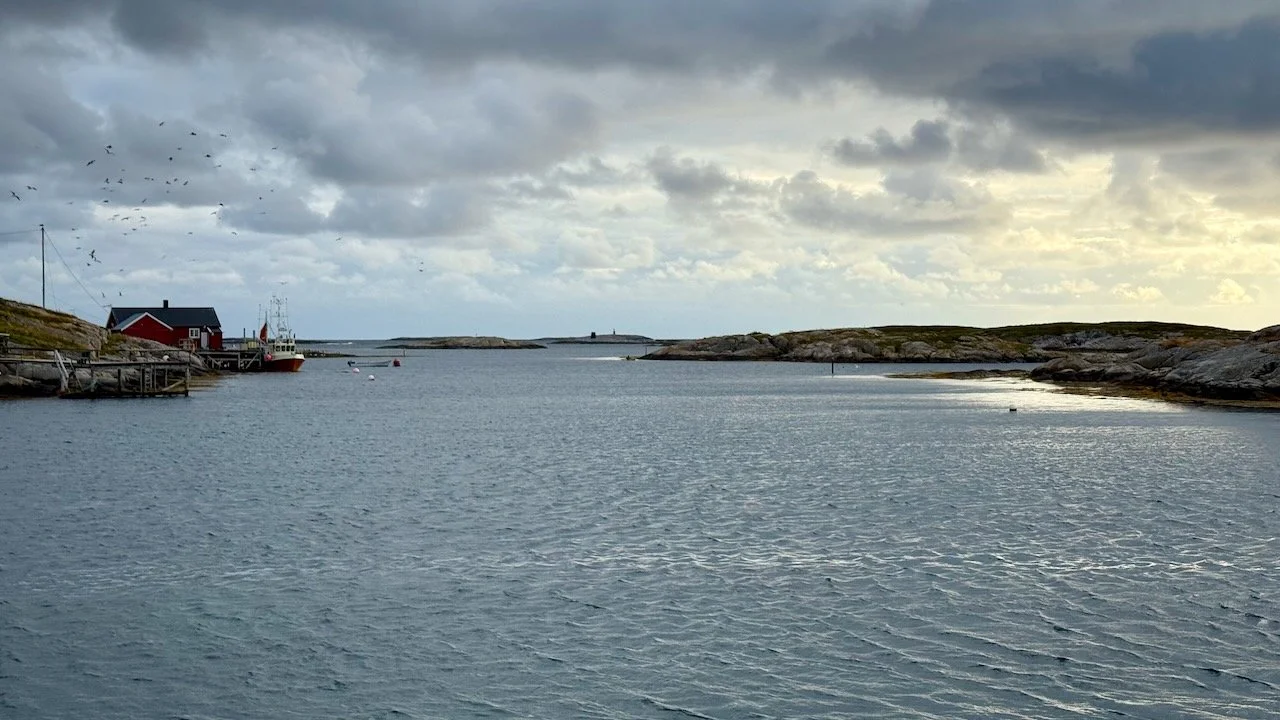
I attempted some dawn photography at 5:00am, but the weather did not play ball. It was overcast and the wind still blowing a howler. I did put the drone up, but it was at its limit and certainly I was keen to minimise flying over water.
In any case, it was great fun exploring the landscape, with only the kittiwakes for company.
As time passed, there were some encouraging signs of a tingle of colour/pink in the skies.


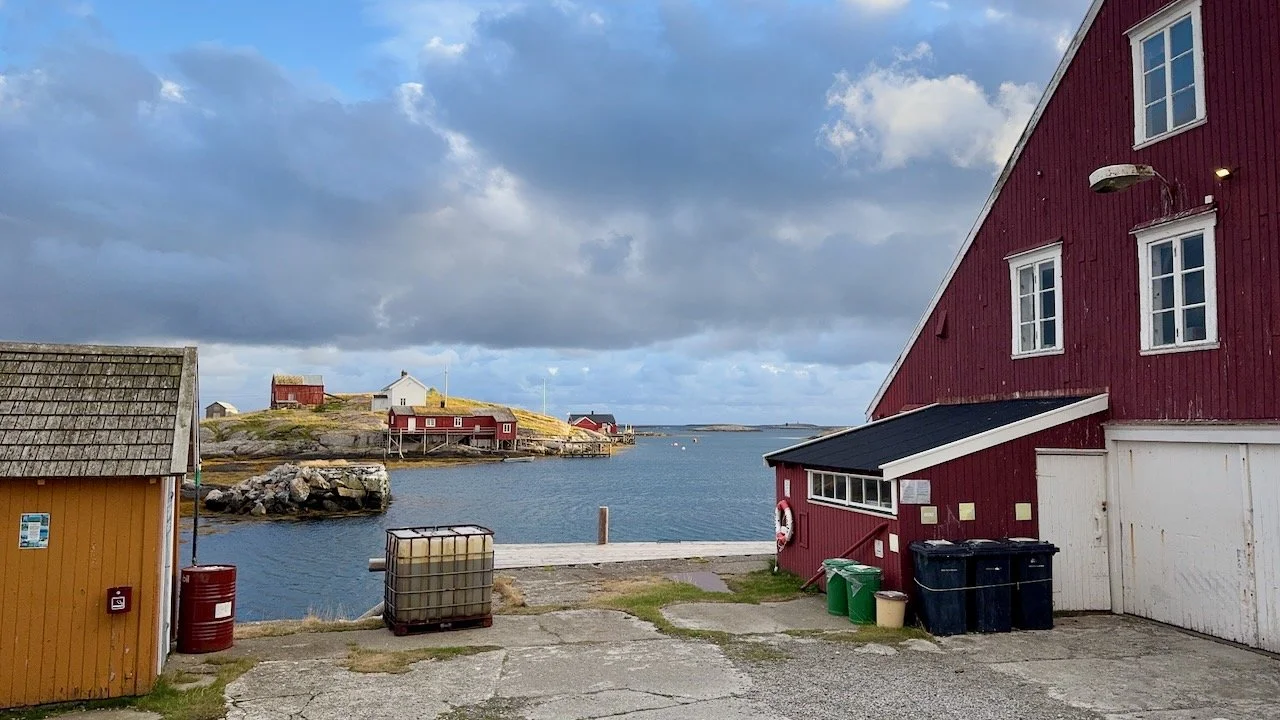
As hoped, by 7:30am, the clouds started to break up and the sun shone through – allowing Sør Gjæslingan to shine in its brilliance of reds, greens and blues.


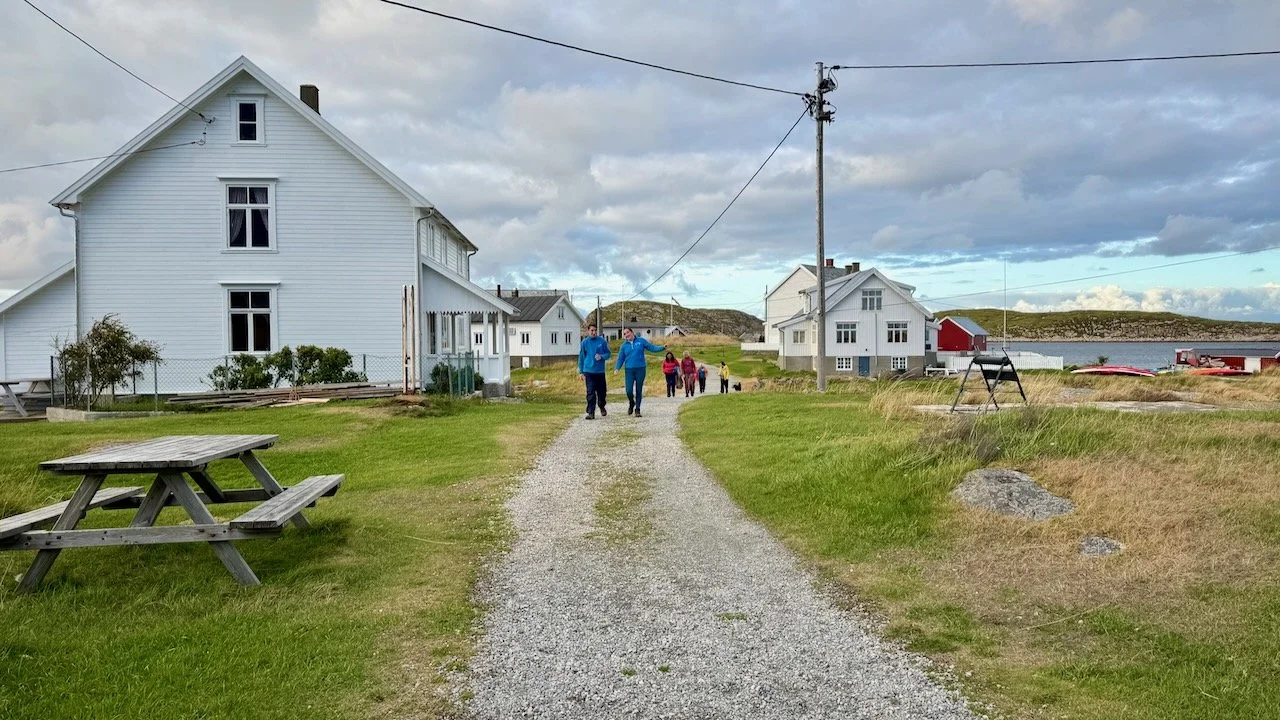
It was so invigorating (and warming) to be exploring the islands in the sun and we climbed up the top of hill behind our hut on Nakken (Utsiktspunkt), which gave us stunning views in all directions.
By 8:00am we were well & truly ready for breakfast and headed to Nakktun to help the assigned crew to cook and prepare the magnificent spread. Namdal Kayakklubb’s thoughtful planning for how 25+ people were going to be fed & watered over two days was exceptional. Absolutely everyone’s tastes & preferences were catered for.

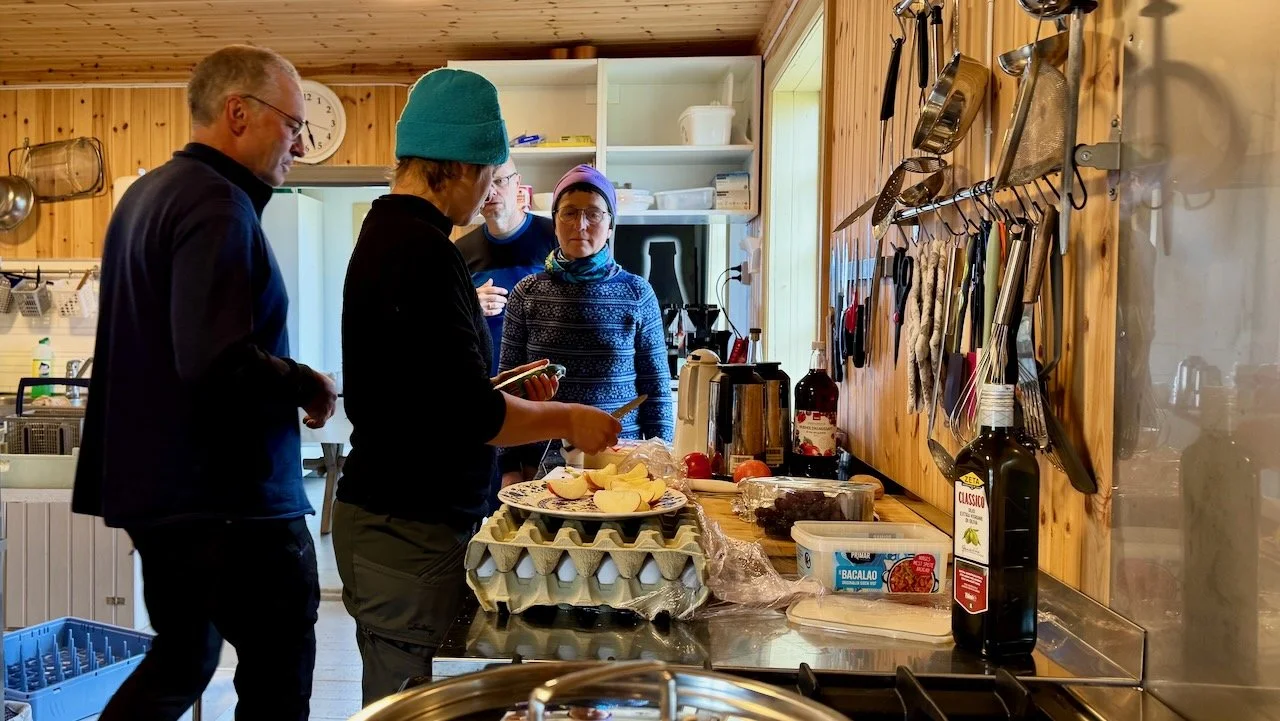
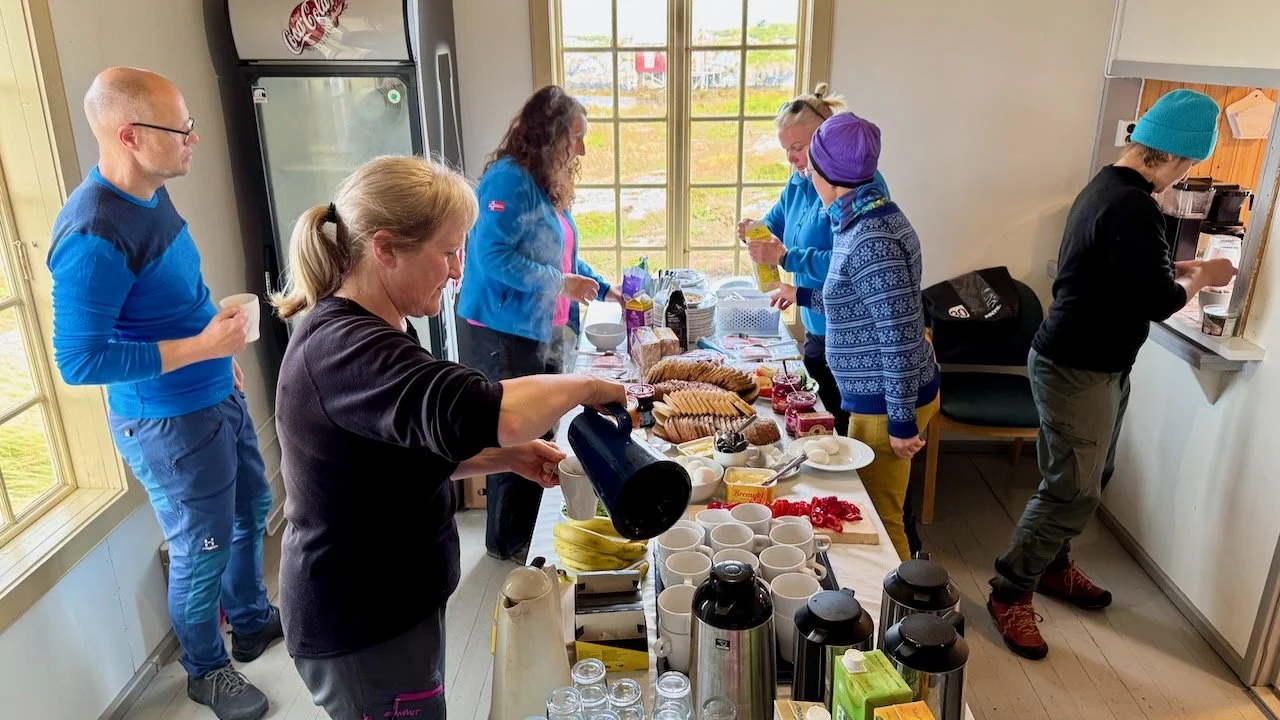
Once everyone was truly sated and the dining hall put back into good order, a plan was landed on for the day:
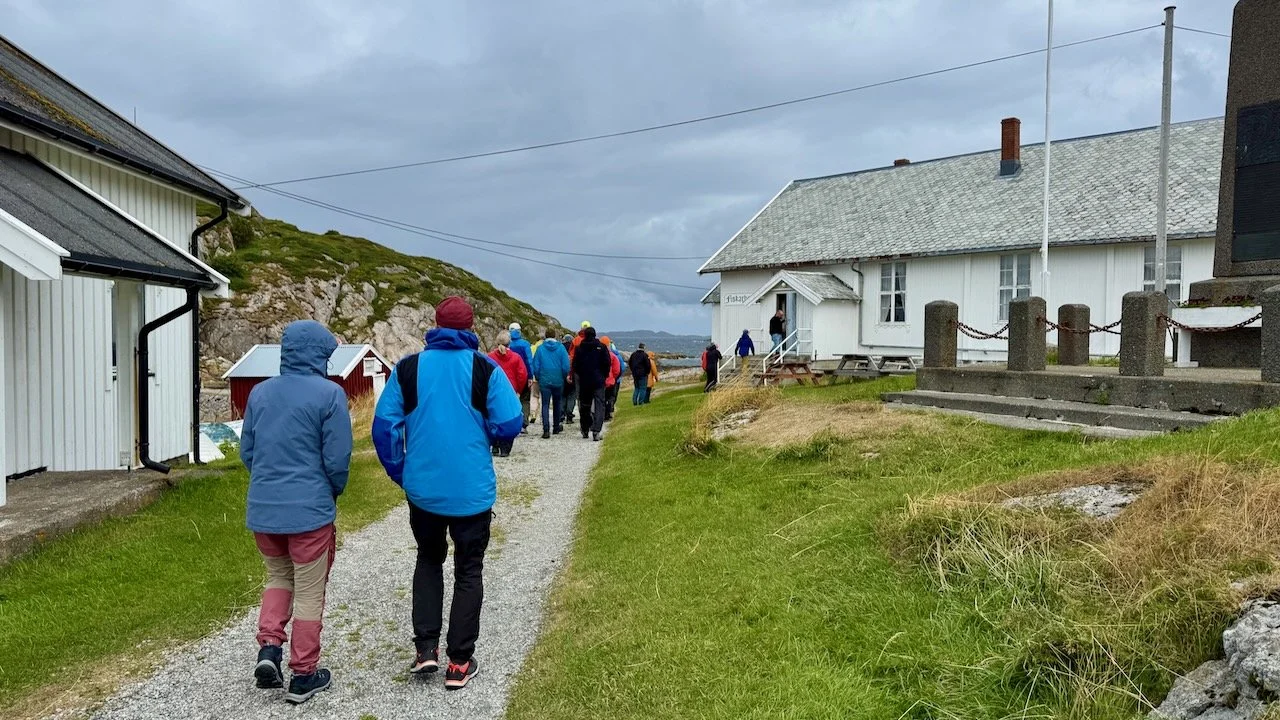
A guided tour of the island, to enjoy the history of the its people and natural elements, while the wind continued to blow;
Followed by an afternoon paddle around the islands and to play in the swell, as the winds were forecast to ease by then.
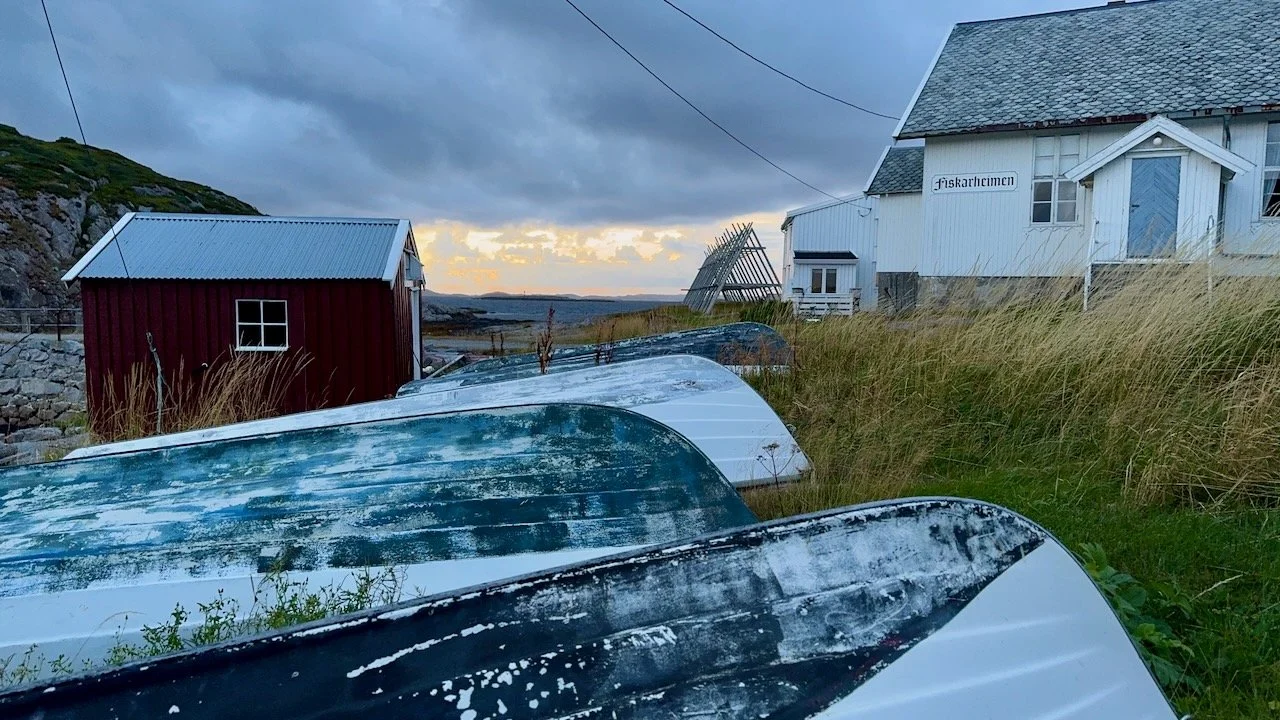
We were incredibly lucky to have managed to get to the island the day before, as by this morning conditions deteriorated to the point that even the intrepid high-speed ferry wasn’t travelling to the island. There is a group of volunteers: “Gjæslingan’s Friends”, which is an association that was started in 1990, and which, in close collaboration with the Norwegian Coastal Museum, helps to keep the fishing village neat and tidy. The Gjæslingan’s Friends happen to also sell waffles and coffee in Fiskarheimen. With the ferry not travelling that day, they were bereft of customers - that was until a whole load of kayakers beat a path to their door.
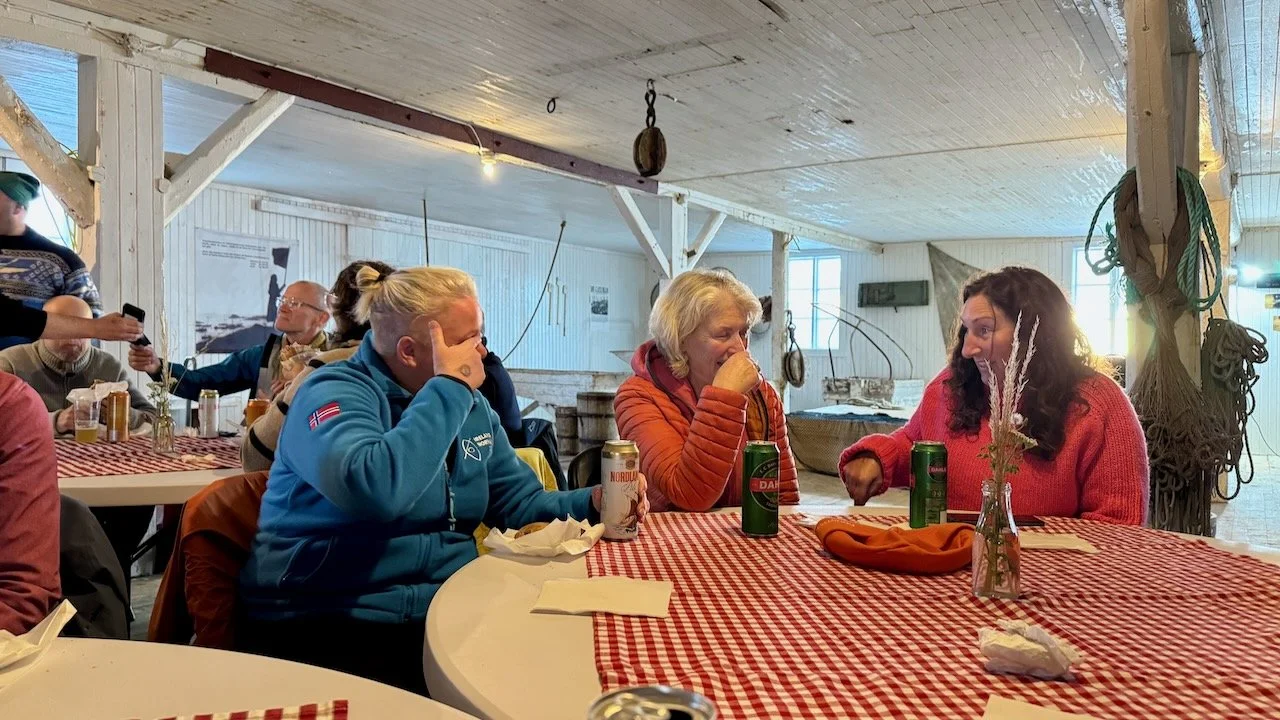
One of the pleasures over the two days, were these times when we sat down as a group and enjoyed food together. It set a lovely pace to the day and allowed everyone to get to know each other. People eat & drank at leisure and chatted away at ease.
It was one of those try “win/win” situations (…and the waffles were delicious!).




While we arrived on Sør Gjæslingan, it was at the end of the kittiwakes nesting season. There were still some kittiwakes nesting and on the wing, but plenty of vacated nests. Apparently the cacophony at peak season is quite something, particularly for the carpenter, whose workshop exterior wall provides rows of nesting shelves.
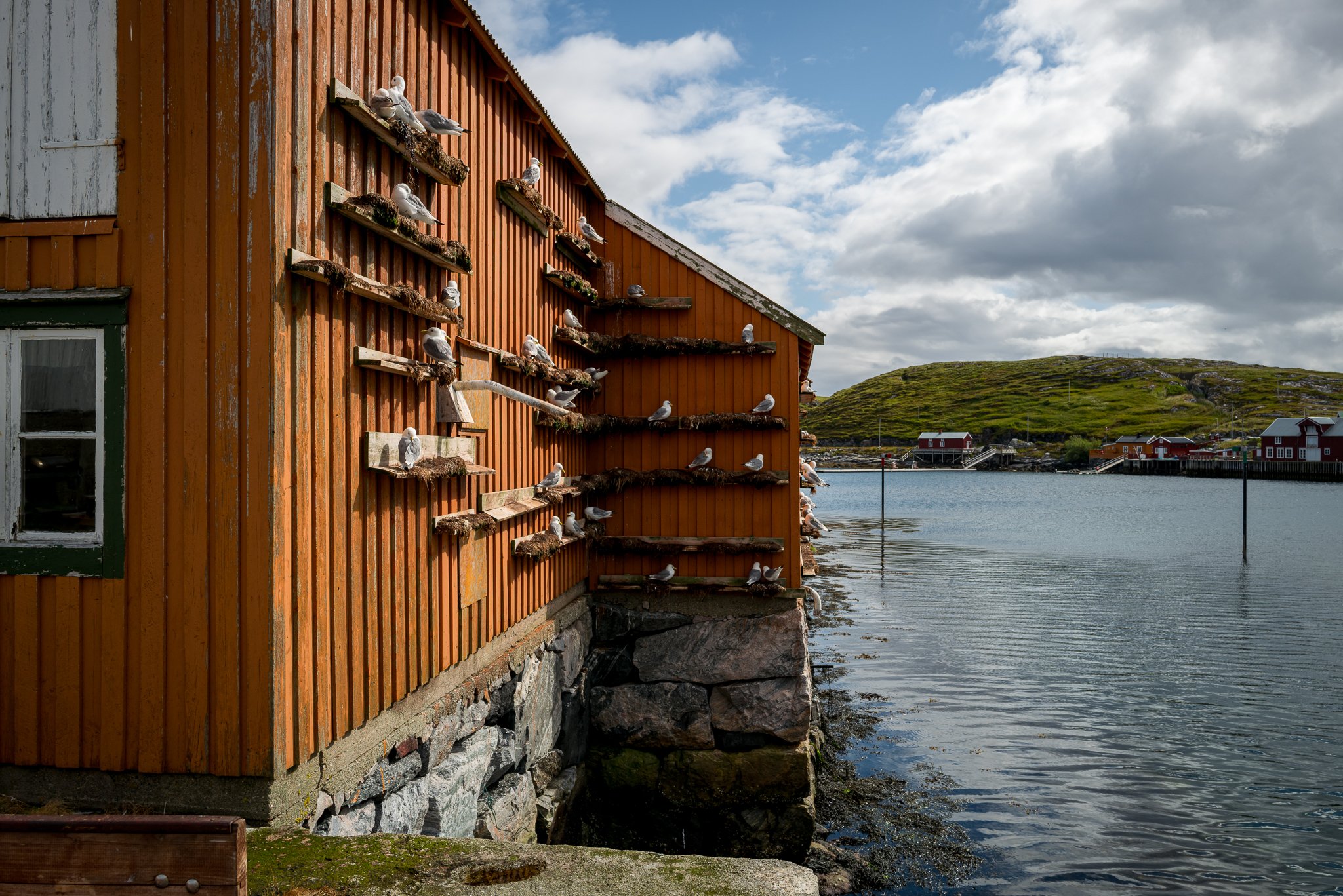
kittiwakes nesting on the facade of the carpenter’s workshop
Ole Johannesen Duun was on Sør Gjæslingan for eight winters (probably from 1891 to 1899), and what he experienced here he stored for later use, in his books “Hilderøya” and “Menneske og makhtene”.
Rolv Thesen writes about the name «Hilderøya» in his big book about Duun. Since Hilderøya does not exist in reality, only in the name Hilderøybotnet - and in the legend of the island that disappeared into the sea - and which Thesen compares to the legend of Atlantis - Duun naturally had to create his own Hilderøy and use names that he partly made up.
Thesen writes in his book that much in Hilderøya can well be called poetry, that is, read as poetry, and this quote really resonated with me:
“Det brann ikkje lenger i vest. Det var grå haustkveld rundt omkring. Øyar og skjer kraup inn i mørkret; det vart berre kveld og sjø. Ein kråkeflokk skreik opp nokon stad ute på skjera, bar seg med forskræmde røyster og kom susande med håse vengeslag over øya. Og stilla let seg att etter dei som ein svart duk.”
“There was no longer any fire in the west. It was a gray autumn evening all around. Islands and rocks crept into the darkness; there was only evening and sea. A flock of crows screamed somewhere out on the skerries, carried themselves with frightened voices and came whizzing with hoarse wingbeats over the island. And silently left behind them like a black sheet.”
– https://sor-gjaeslingan.no/hilderoya-oyvaeret-gjaeslingan-og-olav-duun/
Fed and watered (again), we were all set for an afternoon paddle, as the wind eased sufficiently for a put-in on Flatholmen.
Stefan led the briefing and outlined a paddle around the island, with a landing on Heimværet to visit the Old Store and school building. The sharp-eyed amount you may spot that while Heimværet is the largest of the islands in Sør-Gjæslingan, it is not connected directly with the other islands. So, yes, rowing to school was a necessity for some of the students.
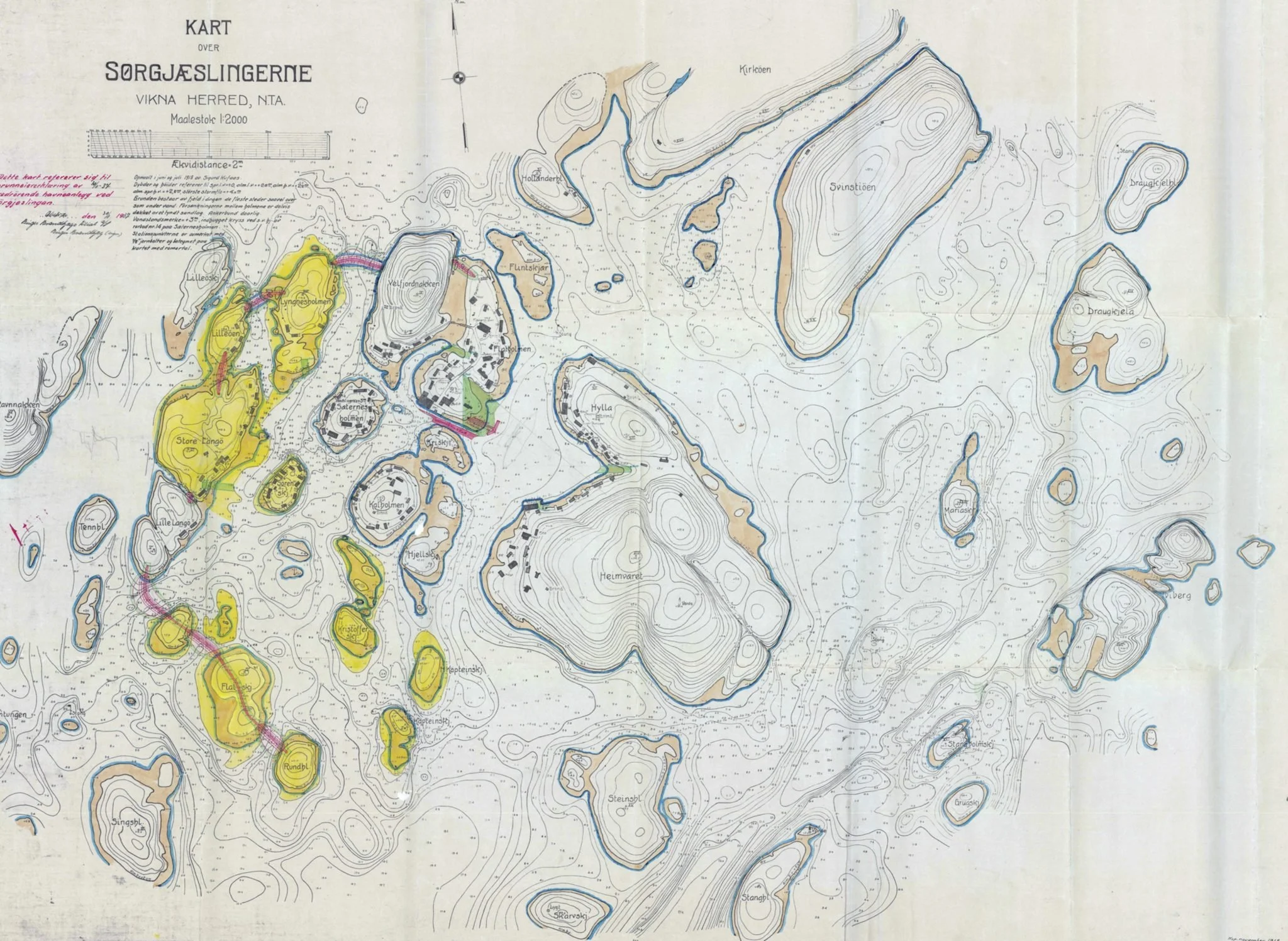
Map of Sør Gjæslingan (circa 1918 / 1937)
We planed a range of conditions for the afternoon paddle, including the protection of the lee of the islands, as well as some fun in the swell.


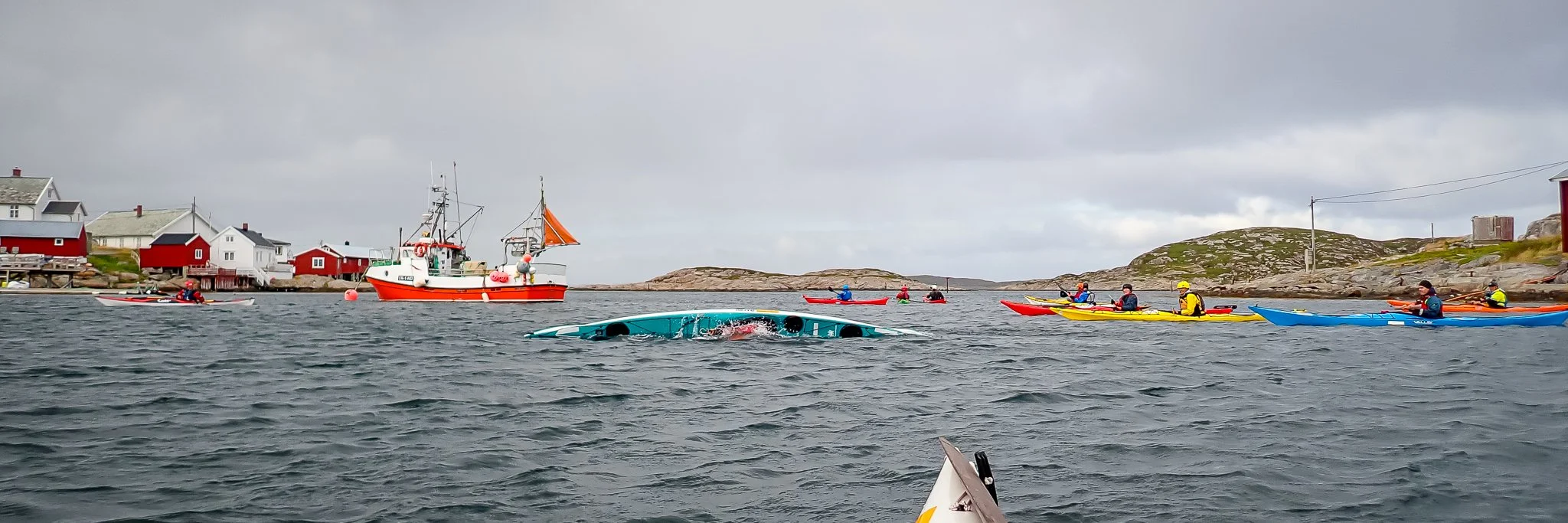
After a couple of hours out on the waves, we paddled our way back into the sanctuary of the harbour. Several paddlers practiced a range of Greenland paddle and hand rolls for good measure.
Then calling time to get back ashore and the kayaks stored. A really, really enjoyable afternoon out on the water.




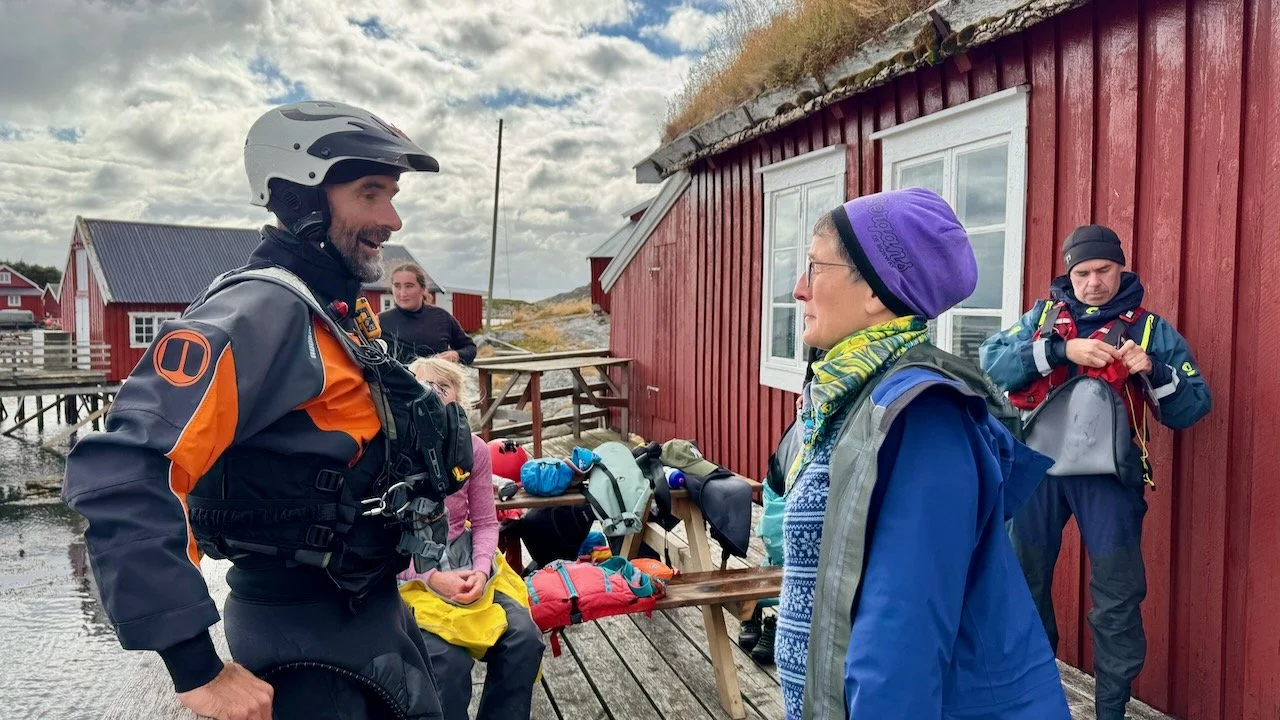
Our Norwegian friends thought of everything, including a small celebration for some of the kayakers of a certain vintage with birthdays of note at the time. The Norwegian Team going above & beyond, in packing multiple cakes in addition to the main food provisions.
No names or ages divulged!
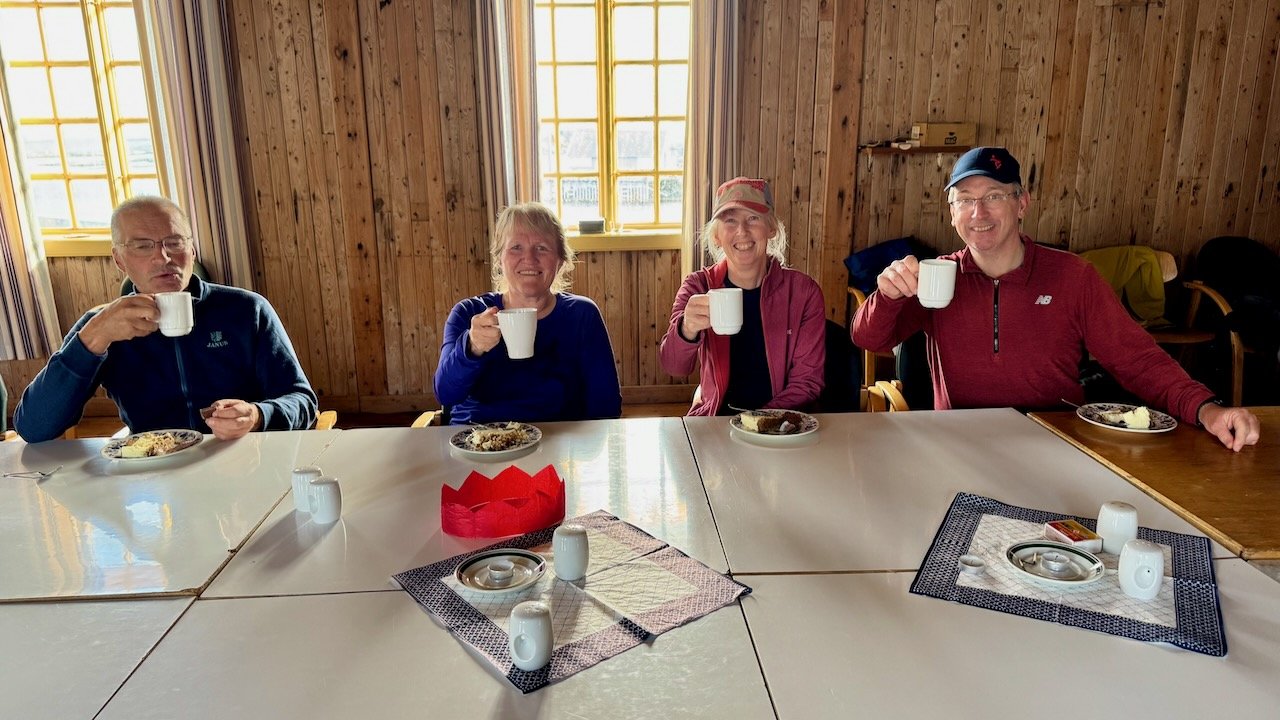
Skål!
By late afternoon, the clouds started to clear and with the wind dropping right down, it was turning into a lovely evening. In between the birthday celebrations and the planned feast, there was a small window to fly out further and so start capturing the islands and inlets from a wider perspective.
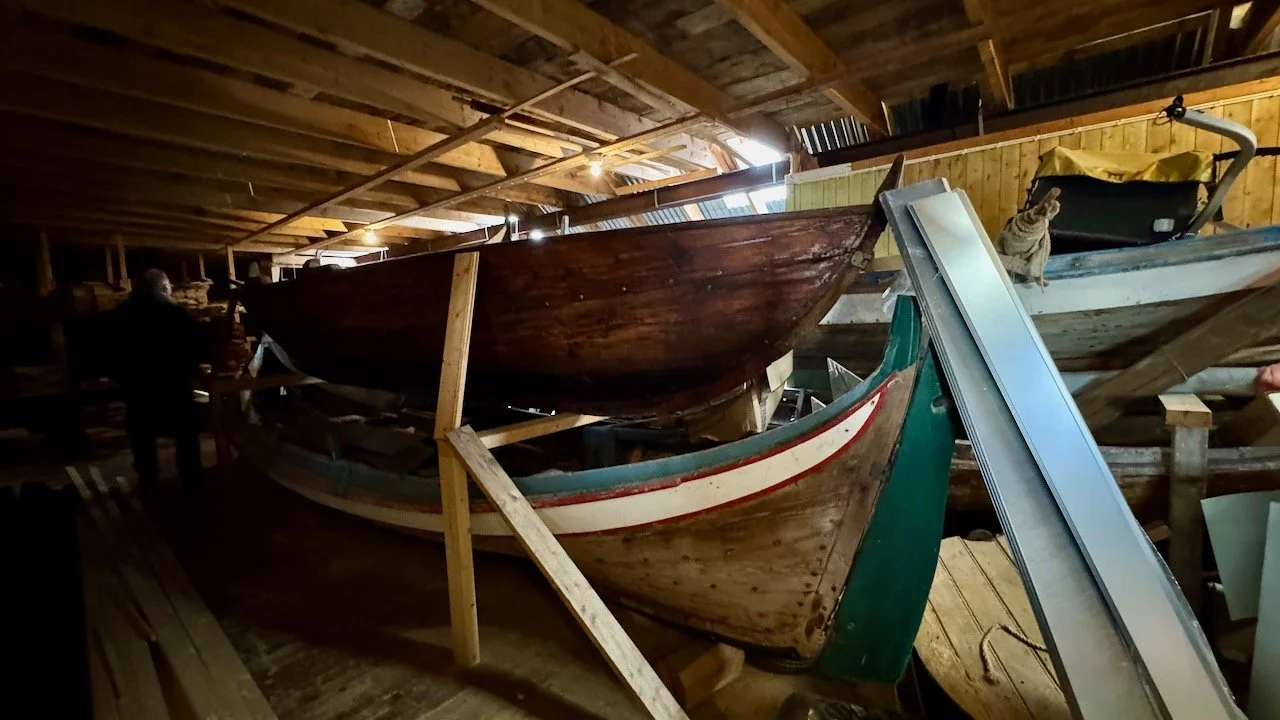
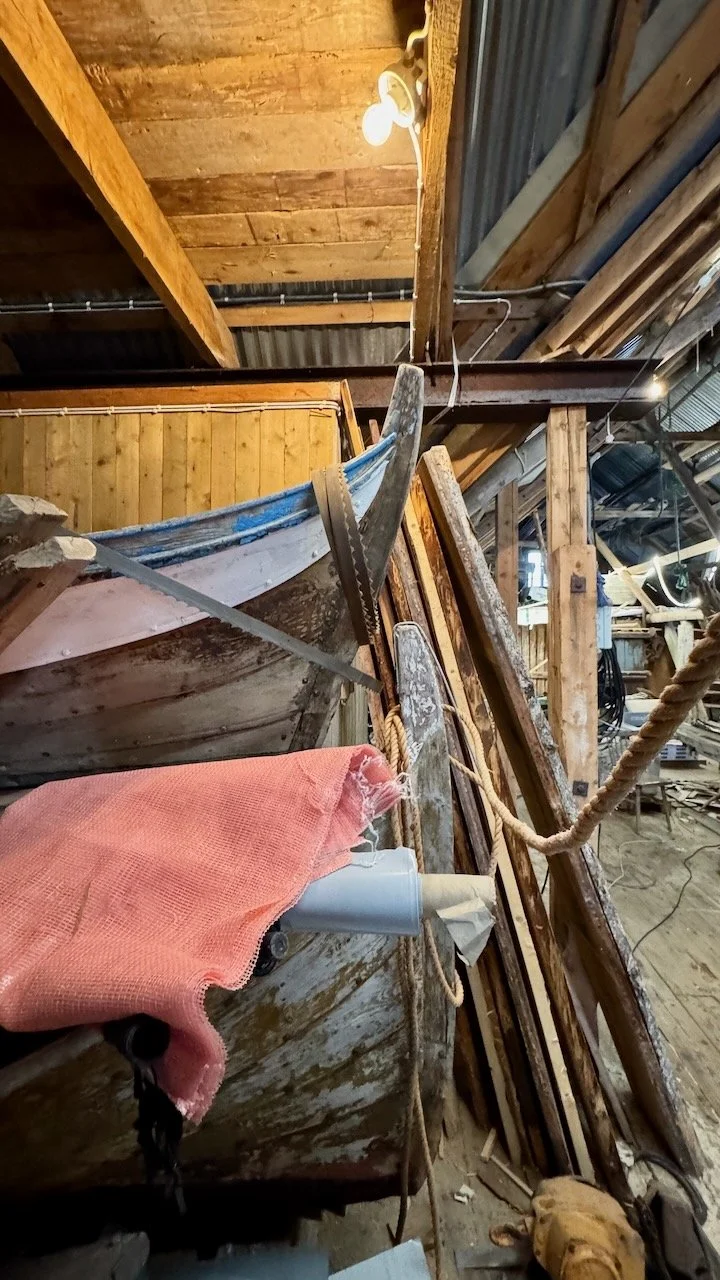
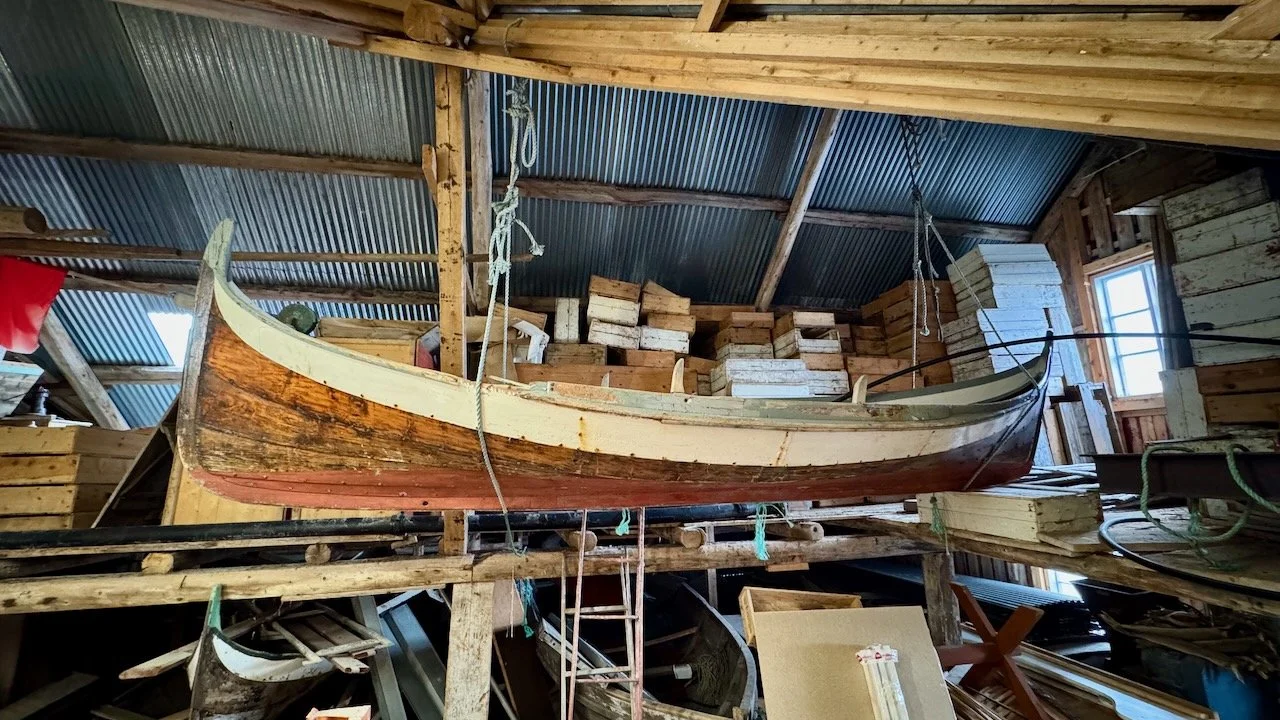
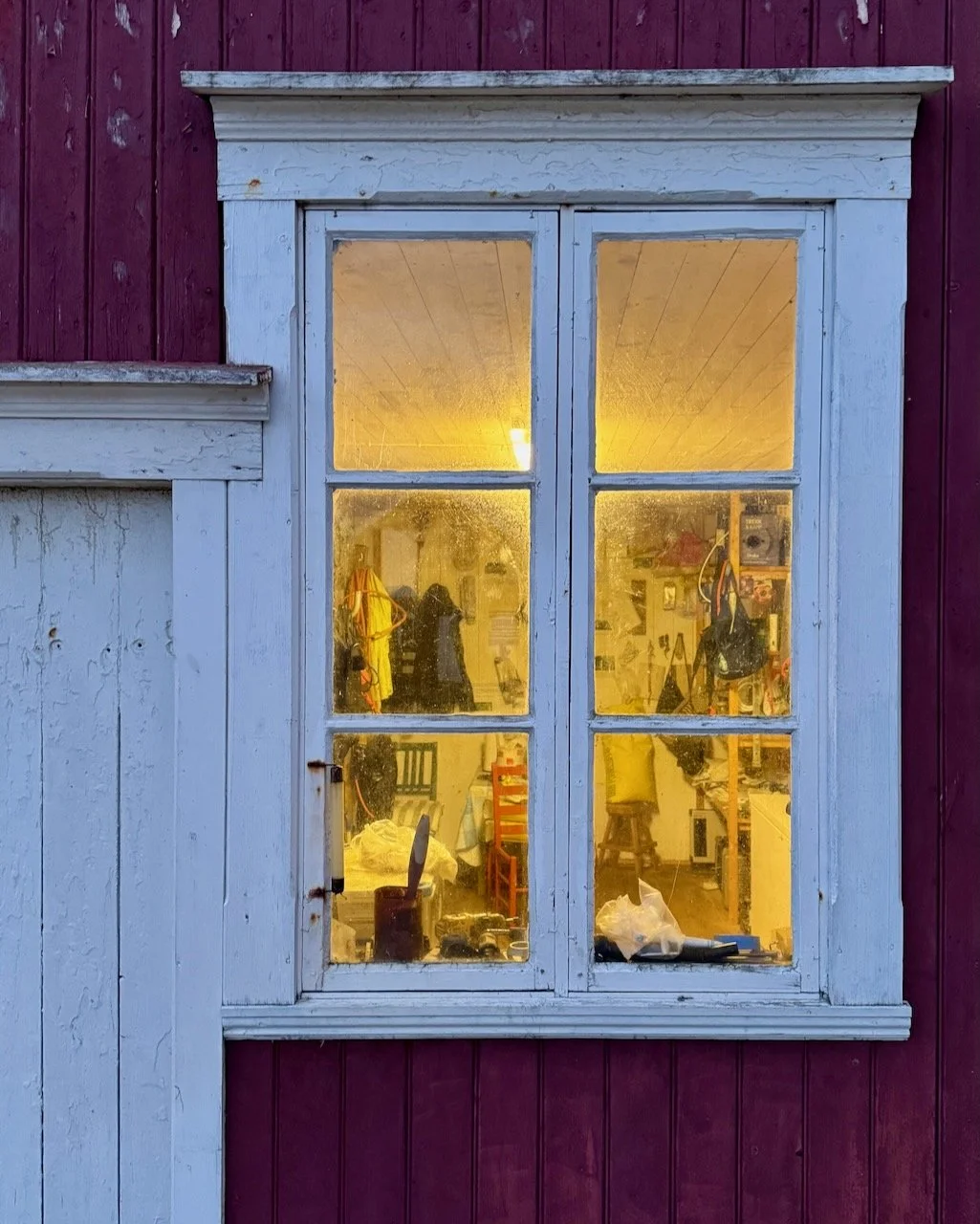
On the way back to the hut, Asle brought me into the workshops and storage buildings. There were several wonderful traditional fishing boats, with flared and raised bows & sterns (double ended). The boat profile is really striking and shows the influence of boat building from the Viking Age.


By 07:30pm everyone was making their way, by land & sea, to the Fiskemottaket (which was the Fish Reception building) for an evening feast.
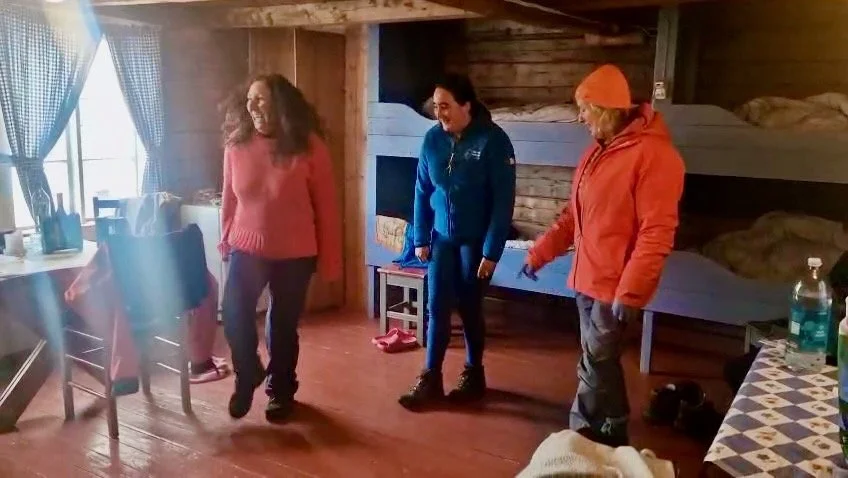
It was a wonderful evening of ceol & craic, with Baileys and “baby-Guinness” in hot demand. Stefan was an absolute legend and never stopped for a minute and was getting everyone out dancing throughout the evening.
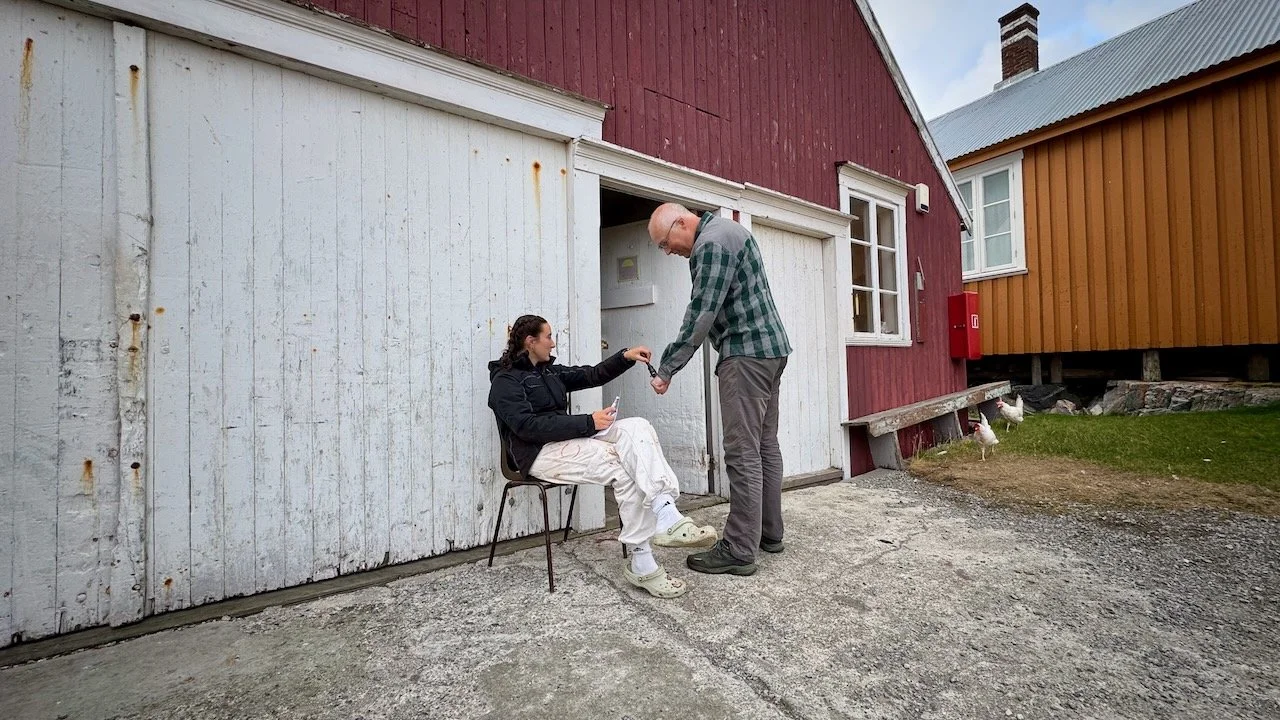






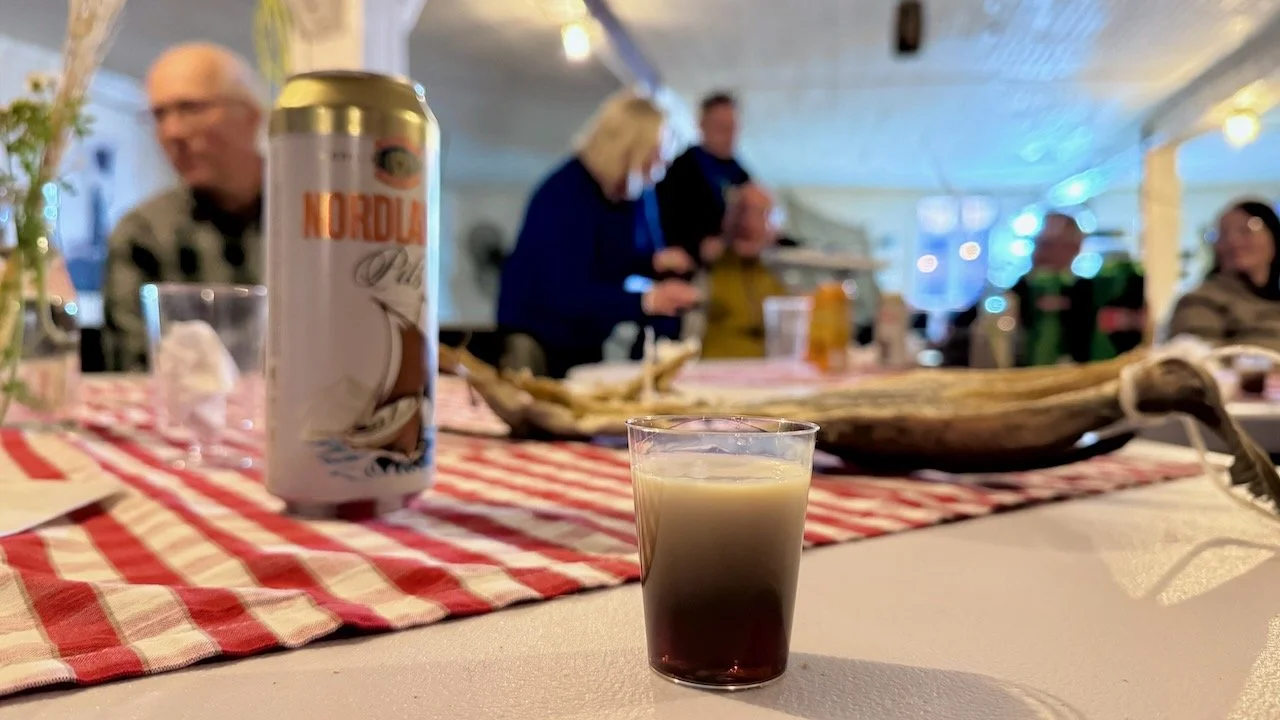
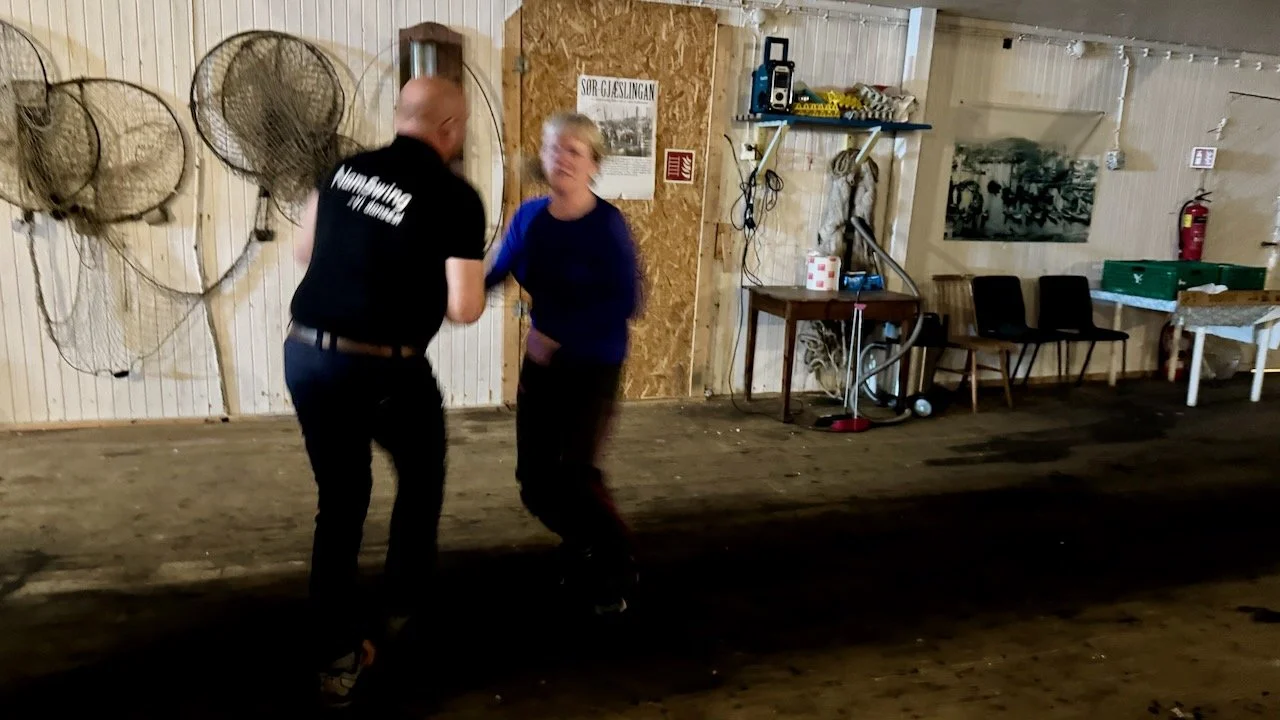
The evening festival continued on into the late night and rounded off another fantastic day on the island.
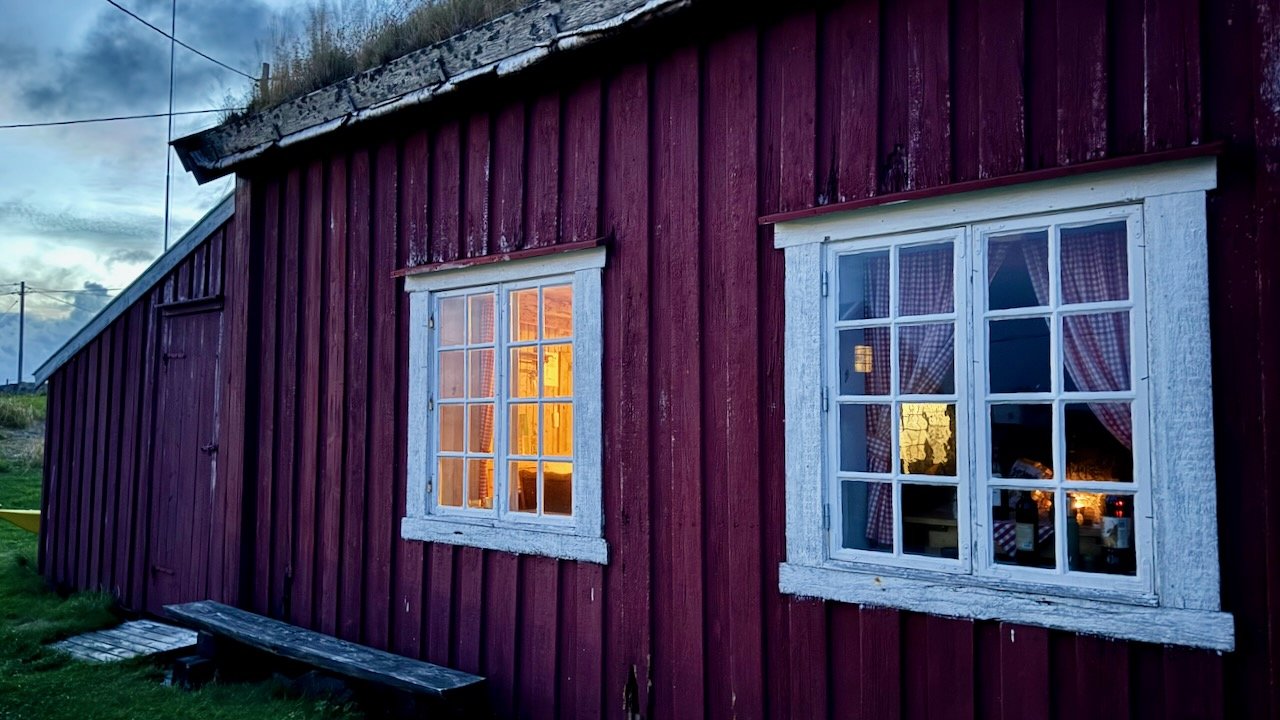
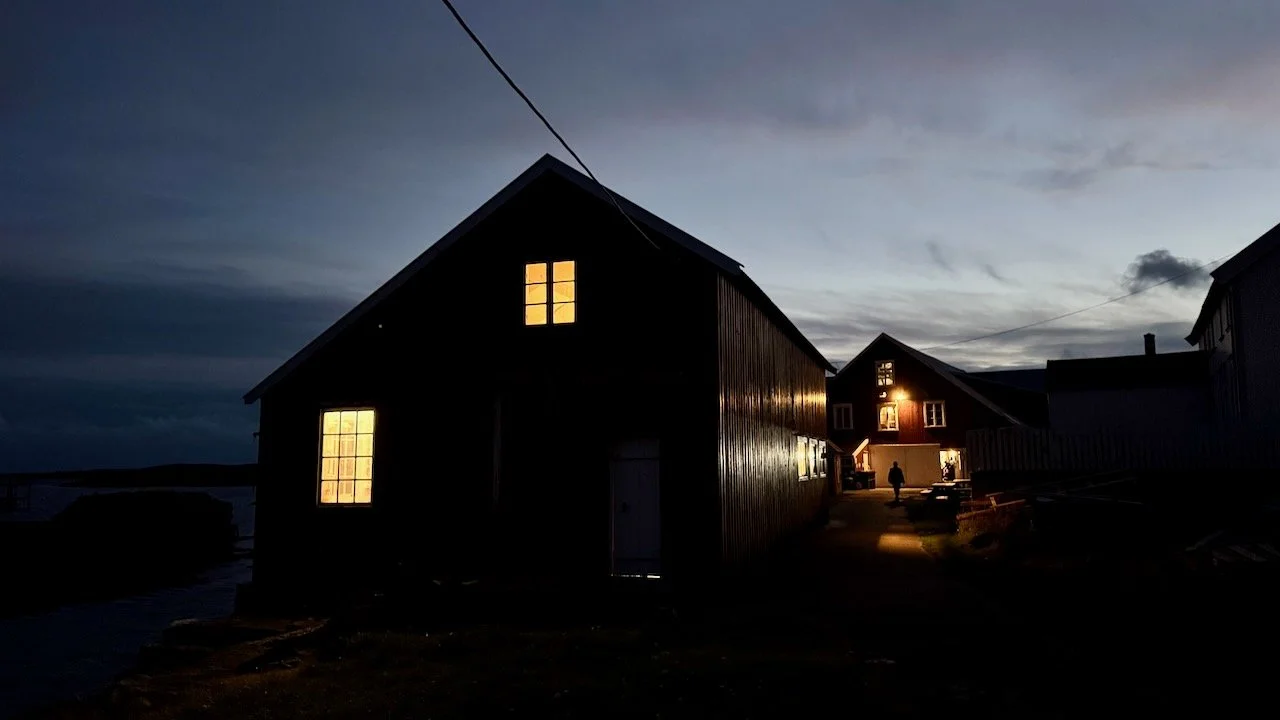
Heading back across the inlet, we made our way back home in the dark to our hut – to soundly sleep & fit awake!